Do You Need a Table Saw? An Honest Answer for DIYers
For most DIYers the honest answer is no — and it has nothing to do with price. Here are the three jobs a table saw does that nothing else does well, and what to buy instead if you aren't doing them.

- Category
- Saws & Cutting Tools
- Tools tested
- 5
- Read time
- 12 min
- Updated
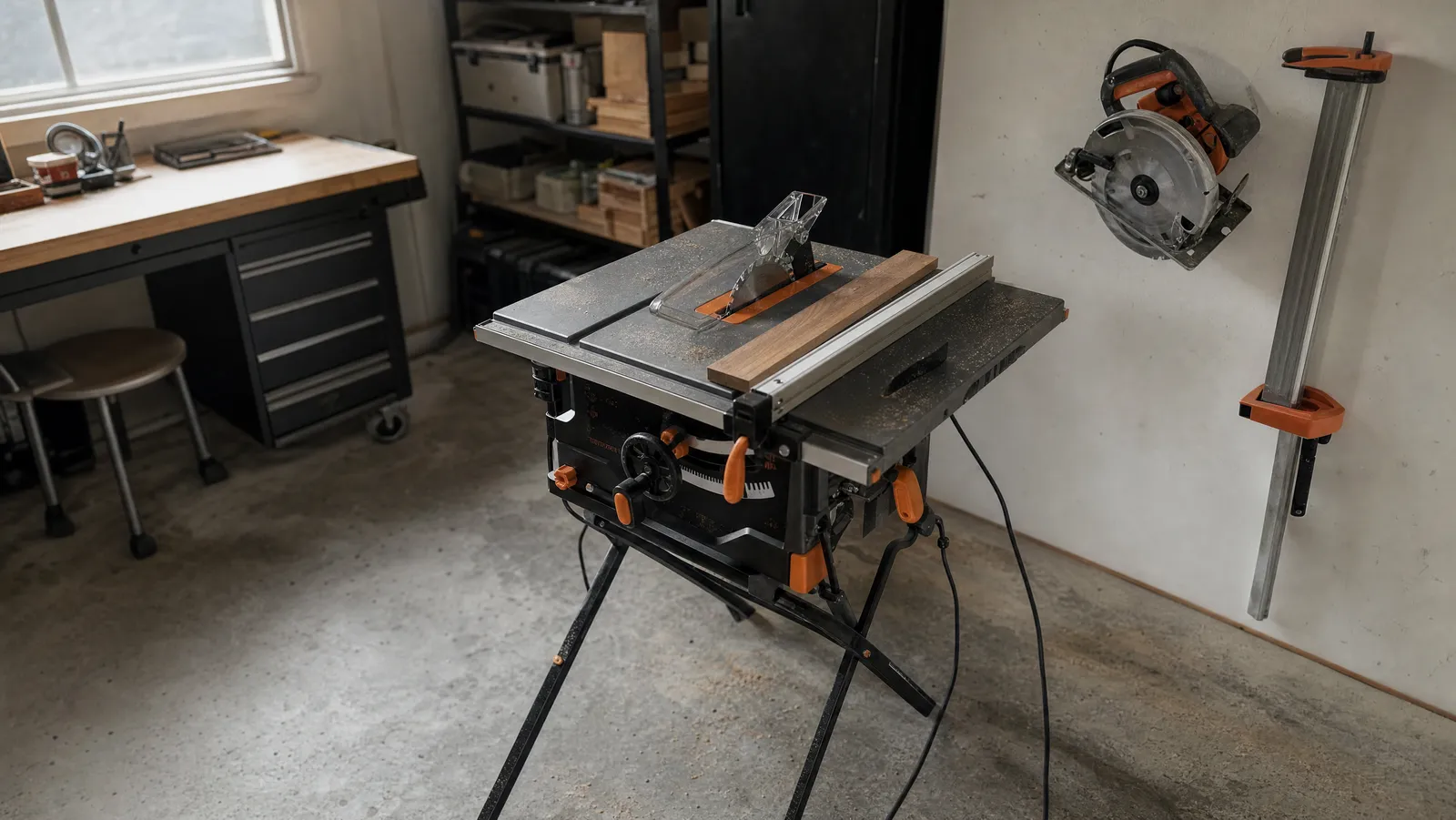
For most DIYers, the honest answer to "do you need a table saw" is no — and the reason is not price. It is that a table saw is only uniquely good at three jobs: repeatable rips to an exact width, rips narrower than about 3 in., and joinery cuts like dadoes and grooves. If none of those three are on your project list, a cheaper tool will do your work nearly as well.
Make that call before you spend anything. If you are still sorting out which saw does what, start with types of saws explained; for the categories ranked in buying order, see our guide to which saw to buy first.
What a table saw is actually for
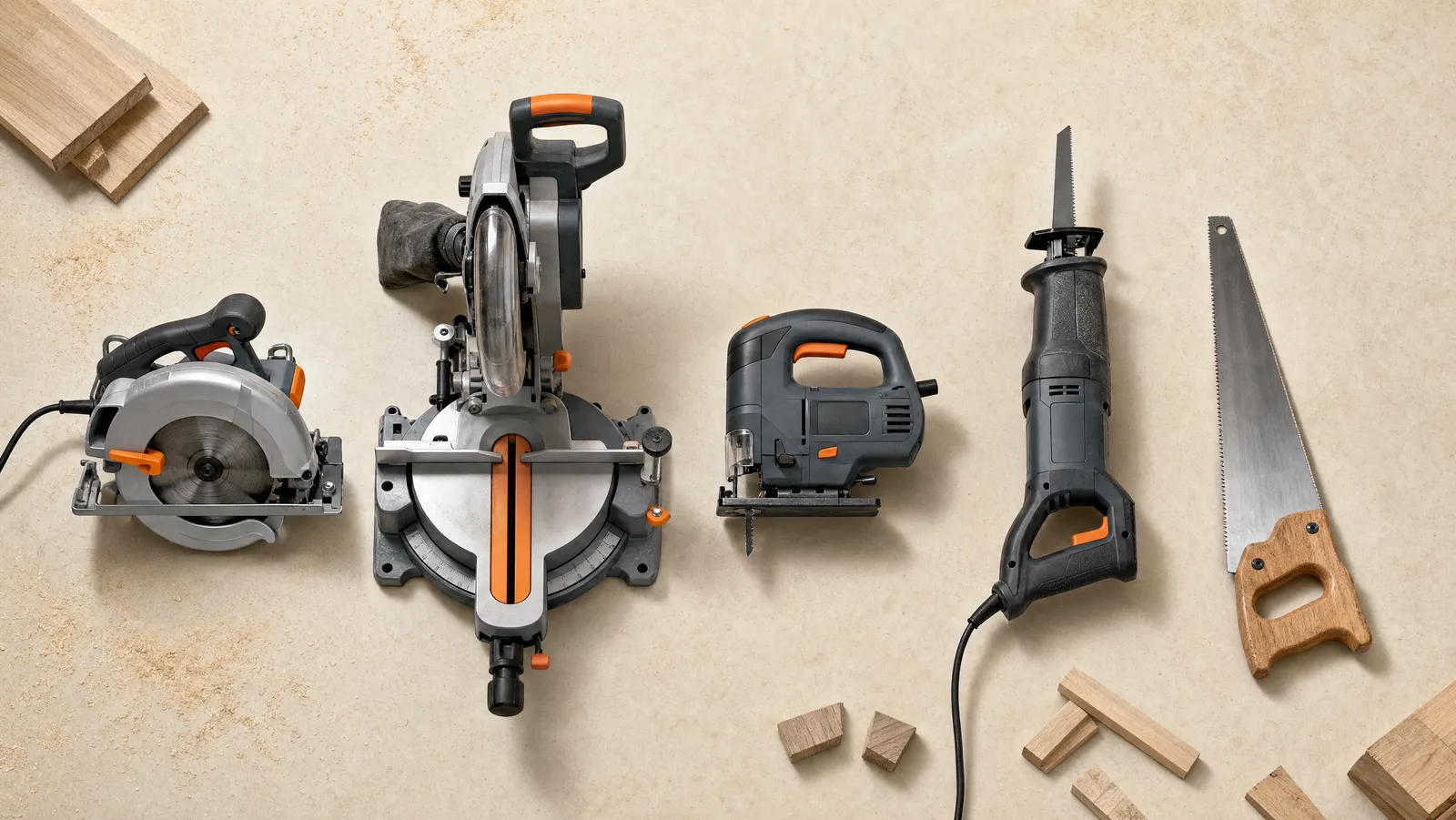
Every other saw in a home shop moves the blade through the wood — circular saw, miter saw, jigsaw, handsaw. You hold the tool; the work stays put. A table saw inverts that. The blade is fixed, spinning up through a slot in a flat table, and you push the workpiece past it against a fence.
That inversion is the entire argument for the tool. Because the fence does not move and the blade height is set once, three things get easy that are awkward or unsafe with anything else:
- Repeatable rips to an exact width. Set the fence to 2-3/8 in. and you can cut twenty identical strips, every one the same. Nothing else in a home shop repeats a rip width that reliably.
- Narrow rips. Taking a 1/2 in. strip off a board is a routine cut with a push stick. On a circular saw, the shoe has nowhere to sit.
- Joinery cuts. Dadoes, grooves and rabbets need a blade at a fixed, settable height. SKIL publishes a 5/8 in. maximum dado width for the TS6307-00 on its own product page.
Everything else a table saw does, something cheaper does nearly as well.
Three questions that mean you do need one
1. Do you need more than a handful of identical parts? Four drawer sides, sixteen face-frame pieces, forty slats for a fence screen. Repeatability is the table saw's real superpower.
2. Do you need rips narrower than about 3 in.? That is a safety answer, not a convenience one. Narrow rips are where a circular saw runs out of base to register against.
3. Are you building furniture, or repairing a house? Cabinets, bookcases and built-ins are rip-and-joinery work. Fixing a deck, framing a wall or hanging a door is crosscut-and-fasten work — see our roundup of cordless power tools for woodworking for the kit that matters once you move from repairs to building.
What to use instead
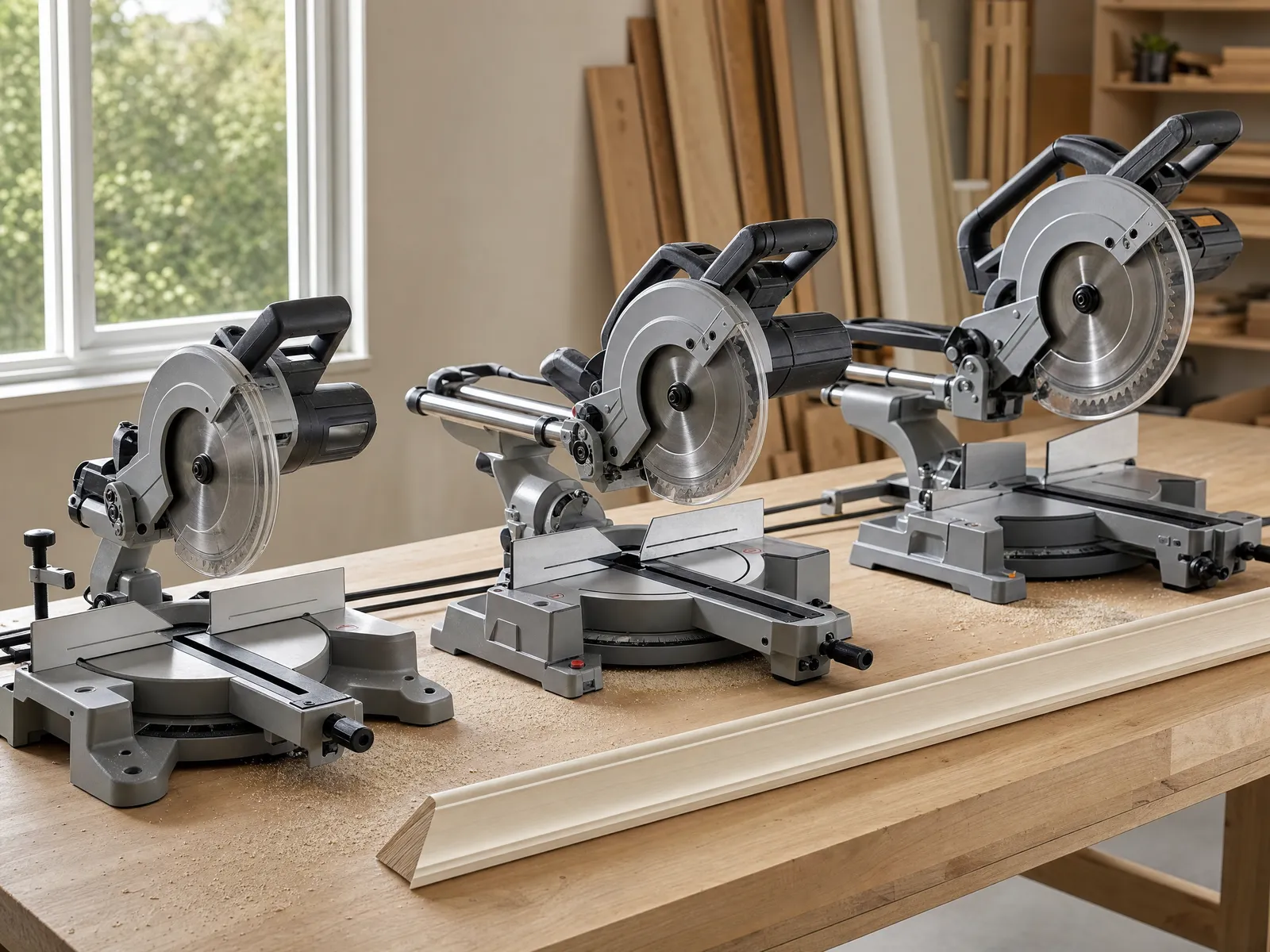
Crosscutting is a miter saw's job. Cutting boards to length across the grain is faster and more accurate on a miter saw, and Cornell's machine shop safety guide is explicit that a table saw's rip fence should not be used for crosscuts at all — that work needs a miter gauge or a sled. If most of your cuts are "take this 2x4 to 38 in.", buy from our best miter saw for diy picks instead.
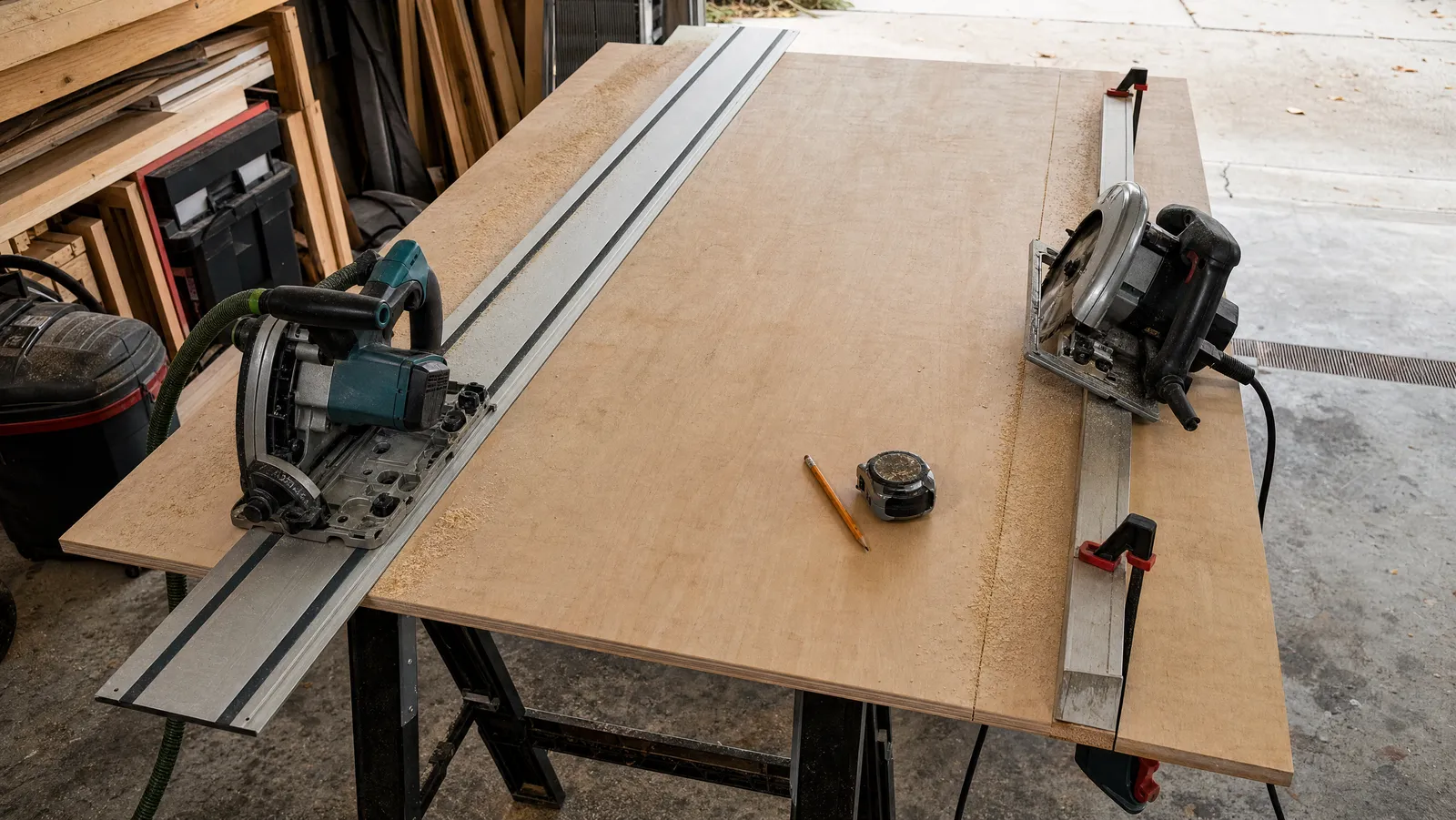
Breaking down sheet goods is a circular saw's job. According to Woodsmith, a full sheet of 3/4 in. plywood can weigh around 80 lb, and its advice is to support the sheet on both sides of the cut with the blade set to extend only slightly below the material. That means cutting the sheet where it lies — not balancing 32 sq ft of plywood on a table a fraction of that size. Clamp a straightedge and you will beat anything you get wrestling a sheet past a fence: see how to cut straight with a circular saw for the technique and best circular saw for diy for the tool.
If the budget is there, a track saw does it better. A track saw is a circular saw with the straightedge built in, and for anyone whose main job is sheet goods it replaces a table saw rather than supplementing it. We compare them directly in track saw vs circular saw.
For one-off joinery, hand tools win on cost. A single shelf dado is a router-and-straightedge job, or twenty minutes with a saw and a chisel. It is the twentieth dado that justifies a table saw, not the first.
What it costs in space and risk
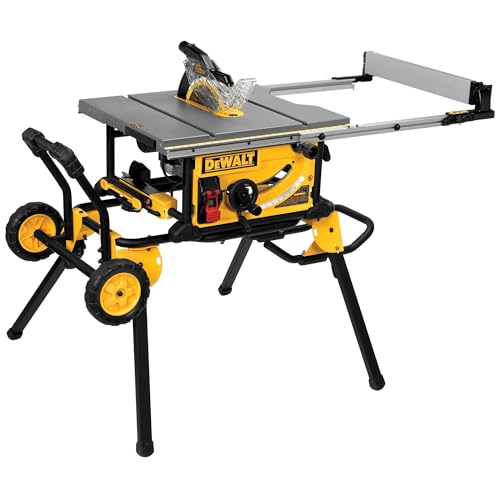
Portable table saws are small on paper and large in practice. The Amazon listing for the DEWALT DWE7491RS gives a table of 21-7/8 in. by 26-3/8 in. — 577 square inches, or almost exactly 4 sq ft. A 4x8 sheet of plywood is 32 sq ft, roughly eight times the area of the table you would balance it on. Add the floor space a rolling stand needs plus clear infeed and outfeed room, and a "portable" saw takes a real bite out of a one-car garage.
Then there is the risk, which is why this tool gets treated differently from every other one in a home shop. According to the CPSC's 2017 table saw blade-contact special study, there were an estimated 26,500 table saw blade-contact injuries treated in US emergency departments that year (95 percent confidence interval 25,200 to 27,800). The same study found an estimated 23,600 of them — 88.9 percent — happened without a blade guard in use, and that an amputation diagnosis accounted for 10.7 percent of the total under NEISS coding — 13.3 percent under the study's own reviewed diagnosis.
The listing is the wrong place to shop for safety hardware
Here is the thing almost nobody checks, and it takes two minutes to verify.
Kickback happens when the workpiece catches the back of the blade or binds between blade and fence; Cornell's table saw safety guide describes the result as the workpiece being "launched back at the operator with great speed." A riving knife is the part that prevents it: it sits directly behind the blade, rises and falls with it, and holds the kerf open so the wood cannot close on the back teeth — the same kerf-closing mechanism behind circular saw kickback. Anti-kickback pawls are the backup, toothed arms that dig in if the board starts travelling the wrong way. Cornell's guide names all three — guard, riving knife, pawls — as the guards a table saw's point of operation should have, and labels them OSHA requirements. According to a CPSC staff page on table saw voluntary standards, UL 987 was revised in January 2005 to add a riving knife requirement.
So which of these saws ship one? We checked the maker pages directly:
- DEWALT DWE7485. The dewalt.com product page lists both a "Non-Through Cut Riving Knife" and "Anti-Kickback Pawls" in the box. Its Amazon bullets mention neither.
- SKIL TS6307-00. The skil.com product page's included list names an "anti-kickback pawl" and a "riving knife." Its Amazon bullets mention neither.
- MarvTool 10 in. No riving knife or anti-kickback pawls appear anywhere in its Amazon listing, and we could not find a MarvTool manufacturer spec page to check the listing against.
This runs backwards from what you would expect: the listings omit the safety hardware on the two saws whose maker pages document it. A shopper comparing Amazon bullet points alone cannot tell a saw that ships a riving knife from one that does not. Open the manufacturer's page before you buy.
One honest limit: a riving knife and pawls only work while the workpiece is long enough to stay engaged with them. SawStop's published table saw safety instructions make the same point — the devices are ineffective on pieces too short to reach them. They do not replace a sled, a jig or a push stick.
What you actually pay for a stand
Two of these saws are, per DEWALT's own documentation, the same saw:
- The DWE7485WS (with stand) at $469.00 as of October 2026, minus the bare DWE7485 at $329.00 as of October 2026, leaves $140.00. Divided by the bare saw's $329.00, the stand is 42.6 percent of the price of the tool it holds up.
- The SKIL TS6307-00 at $299.00 as of October 2026 is $30.00 cheaper than the bare DEWALT — and it arrives with a folding stand and takes a 10 in. blade instead of 8-1/4 in.
- Against the DEWALT bundle, the SKIL is $170.00 less, or 36.2 percent cheaper, for two saws that both arrive with a stand.
- The spread is wide: $599.00 divided by $169.99 (both as of October 2026) is 3.52, a $429.01 gap from cheapest to dearest.


Drag to compare all 5 →
The "(maker)" and "(listing)" tags matter. SKIL's and DEWALT's figures come from manufacturer pages we fetched; the MarvTool's 3.4 in. and the DWE7491RS's 32-1/2 in. come from Amazon listings only, and the MarvTool has no maker page behind it at all. Of the three saws publishing a square-cut depth, SKIL's 3.5 in. is deepest — 3/8 in. more than the DWE7491RS listing figure. DEWALT's product page for the DWE7485 gives no depth of cut, so neither 8-1/4 in. variant is in that comparison.
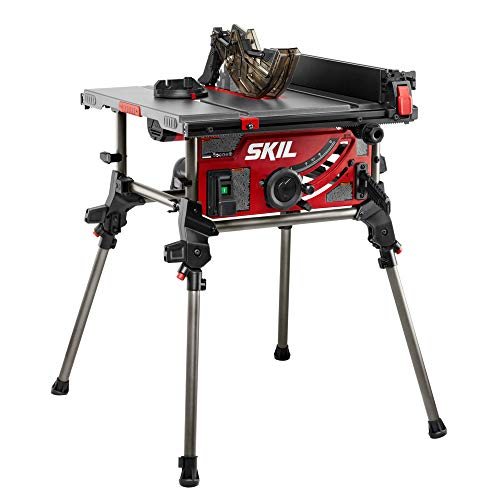
SKIL TS6307-00
A 10-inch saw with an integrated folding stand for less than DEWALT's 8-1/4 in. saw costs on its own.
Pros
- Integrated folding stand is included in the $299.00 price
- SKIL publishes 3.5 in. depth of cut at 0 degrees and 25.5 in. of rip to the right of the blade
- Rack-and-pinion fence rails keep the fence parallel to the blade
- Bevels to -2 degrees, so it can cut slightly past square in both directions
Cons
- 4600 RPM no-load is the lowest published figure here, tied with the MarvTool listing's figure
- Amazon's bullets omit the anti-kickback hardware SKIL documents, so the listing undersells the saw
One last number: halving a 48 in. sheet needs 24 in. of rip. DEWALT's published 24.5 in. on the DWE7485 leaves 1/2 in. of margin; SKIL's 25.5 in. right of the blade leaves 1-1/2 in.; the DWE7491RS listing's 32-1/2 in. leaves 8-1/2 in. — room to spare rather than room to be careful.
Where the safety-technology story stands in 2026
If you have been waiting for flesh-detection saws to get cheap, waiting is not a plan.
The CPSC spent well over a decade on a mandatory table saw standard: an advance notice on October 11, 2011, a proposed rule on May 12, 2017, and a supplemental proposal on November 1, 2023. The 2017 proposal would have required a saw to limit its cut depth to no more than 3.5 mm when a test probe standing in for a finger approaches the spinning blade at 1 metre per second — and 3.5 divided by 25.4 is about 0.14 in., a shade over 1/8 in.
That proposal is gone. According to the Federal Register notice published September 29, 2025 (FR Doc. 2025-18810), the Commission formally withdrew it alongside three unrelated rulemakings, stating it "no longer intends to issue final rules with respect to these proposals." Note what that does not mean: no existing saw was banned, recalled or made non-compliant.
Nor is the patent position loosening. SawStop's core patent US 9,724,840, "Safety systems for power equipment," filed in 2002 and now assigned to SawStop Holding LLC, shows a status of Active with an adjusted expiration date of April 8, 2033 on Google Patents, which we checked directly.
The order of events on the legislative side matters too. Representatives Marie Gluesenkamp Perez and Jeff Duncan announced the bipartisan Preserving Woodworking Traditions and Blocking Government-Mandated Monopolies Act on April 30, 2024 — roughly 17 months before the withdrawal reached the Federal Register, so it was not a response to it. It would bar the CPSC from requiring finger-detection technology until at least five years after the relevant patents expire or are dedicated to the public. It went in as H.R. 8181 of the 118th Congress and, according to congressional bill trackers, got no further than a May 3, 2024 referral to the House Subcommittee on Innovation, Data, and Commerce; that Congress ended in January 2025, and we found no record of a reintroduction since.
The practical takeaway: flesh-detection technology is not arriving on $300 saws any time soon. The kickback hardware on the saw you actually buy is what matters.
So, do you need a table saw?
If you are repairing a house, breaking down plywood or cutting boards to length, no. A circular saw with a straightedge and a miter saw do that work better, in less space, for less money — and our complete DIY saw guide ranks which to buy first.
If you are making multiples, ripping narrow or cutting joinery — building furniture rather than fixing a house — then yes, and the shopping advice is short. Decide whether you need a stand, because at $140.00 and 42.6 percent of a bare saw's price it is the biggest line item that is not the saw. Then check the maker's page for a riving knife and anti-kickback pawls before you check anything else.
Frequently asked questions
What are table saws good for?
Three things nothing else does as well: repeatable rips to an exact width, rips narrower than about 3 in., and joinery cuts like dadoes, grooves and rabbets. All three come from the same design — a fixed blade at a set height with a fence to reference against. Crosscutting and breaking down sheet goods are better handled elsewhere.
What is the best table saw for a beginner?
On published figures rather than hands-on testing, we would buy the SKIL TS6307-00 at $299.00. It is the cheapest saw here that arrives with a stand, it takes a 10 in. blade, SKIL publishes 3.5 in. of depth at 0 degrees and 25.5 in. of rip right of the blade, and skil.com documents both a riving knife and an anti-kickback pawl in the box.
What can I use instead of a table saw?
A circular saw with a clamped straightedge covers long rips and sheet goods, and lets you cut the sheet where it lies. A miter saw covers crosscuts. A track saw covers both more accurately if the budget stretches. For occasional joinery, a router with a straightedge, or a chisel and hand saw, will do it.
Is a table saw worth it for DIY?
It depends on volume, not ambition. For the occasional project, the money goes further spread across a circular saw, a guide and a miter saw. Once you are cutting the same width twenty times, ripping narrow stock, or cutting dadoes regularly, a table saw stops being a luxury and starts saving real hours.
About the Author
Cheryl Thompson
Cheryl Thompson is the tools editor at The DIY Tool Review. A lifelong fixer and self-confessed tool addict, she has spent years buying, borrowing and wearing out hand and power tools across home renovation, furniture building and everyday repairs. She writes hands-on, no-nonsense reviews to help fellow DIYers spend their money on the tools that actually last.