The Best Cordless Power Tools for DIY (2026 Buyer's Guide)
The complete beginner's map to cordless power tools — which two to buy first, how batteries and voltage really work, brushless vs brushed, and the platform to grow into.

- Category
- Power Tools
- Tools tested
- 4
- Read time
- 17 min
- Updated
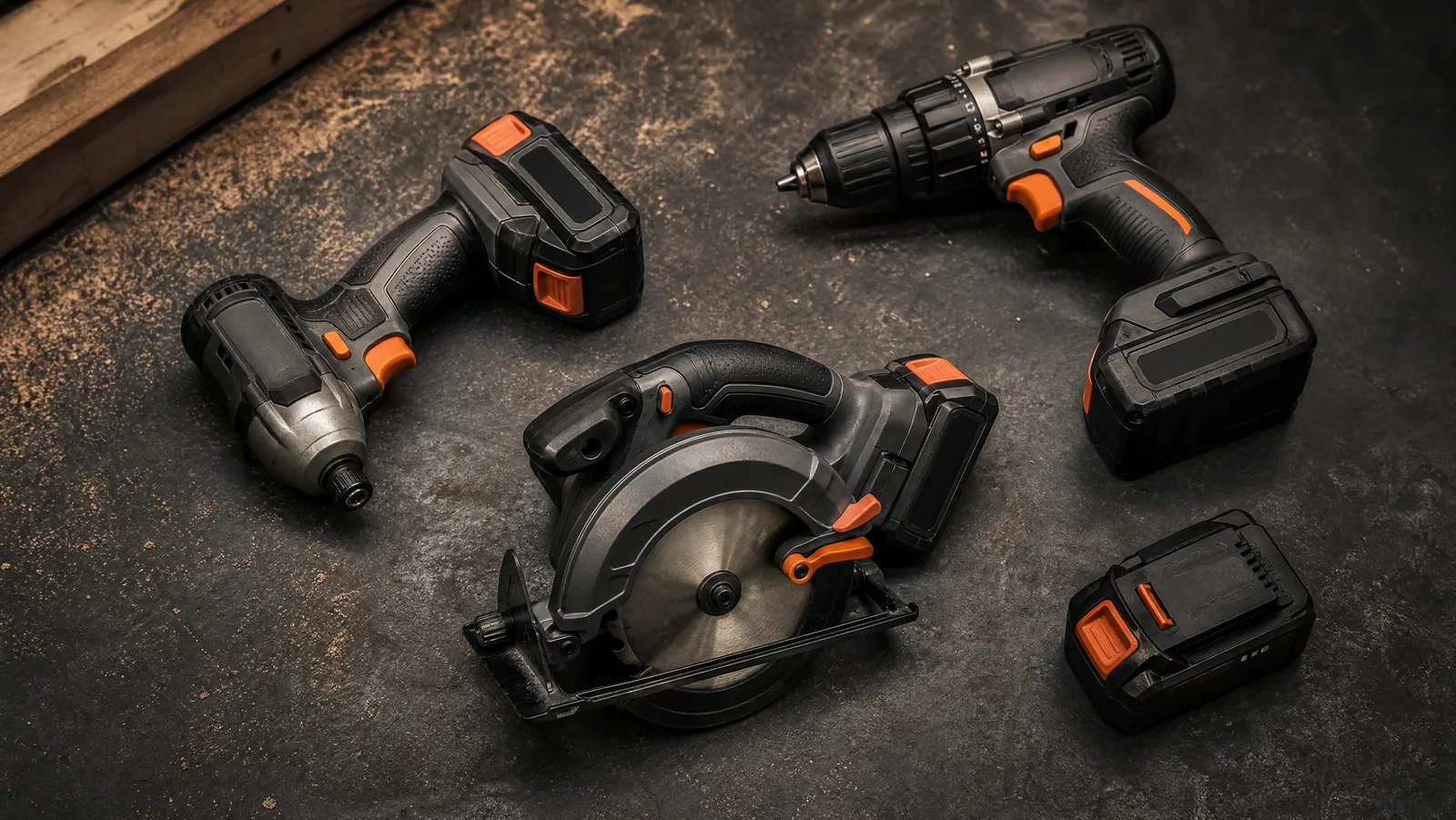
The best cordless power tools for DIY aren't the ones with the biggest spec sheet — they're the two or three you'll actually reach for every weekend, running on a battery system you can grow into for years. If you're staring at a wall of drills, drivers and combo kits with no idea where to start, this is the hub that sorts it out.
We'll show you the exact tools to buy first, decode the jargon (18V vs 20V, brushless vs brushed, amp-hours), and point you to a deeper guide for every branch of the decision. No overwhelm, no invented specs — just the shortest path from "I own nothing" to a cordless kit that handles the vast majority of home projects.
The best cordless power tools for DIY at a glance
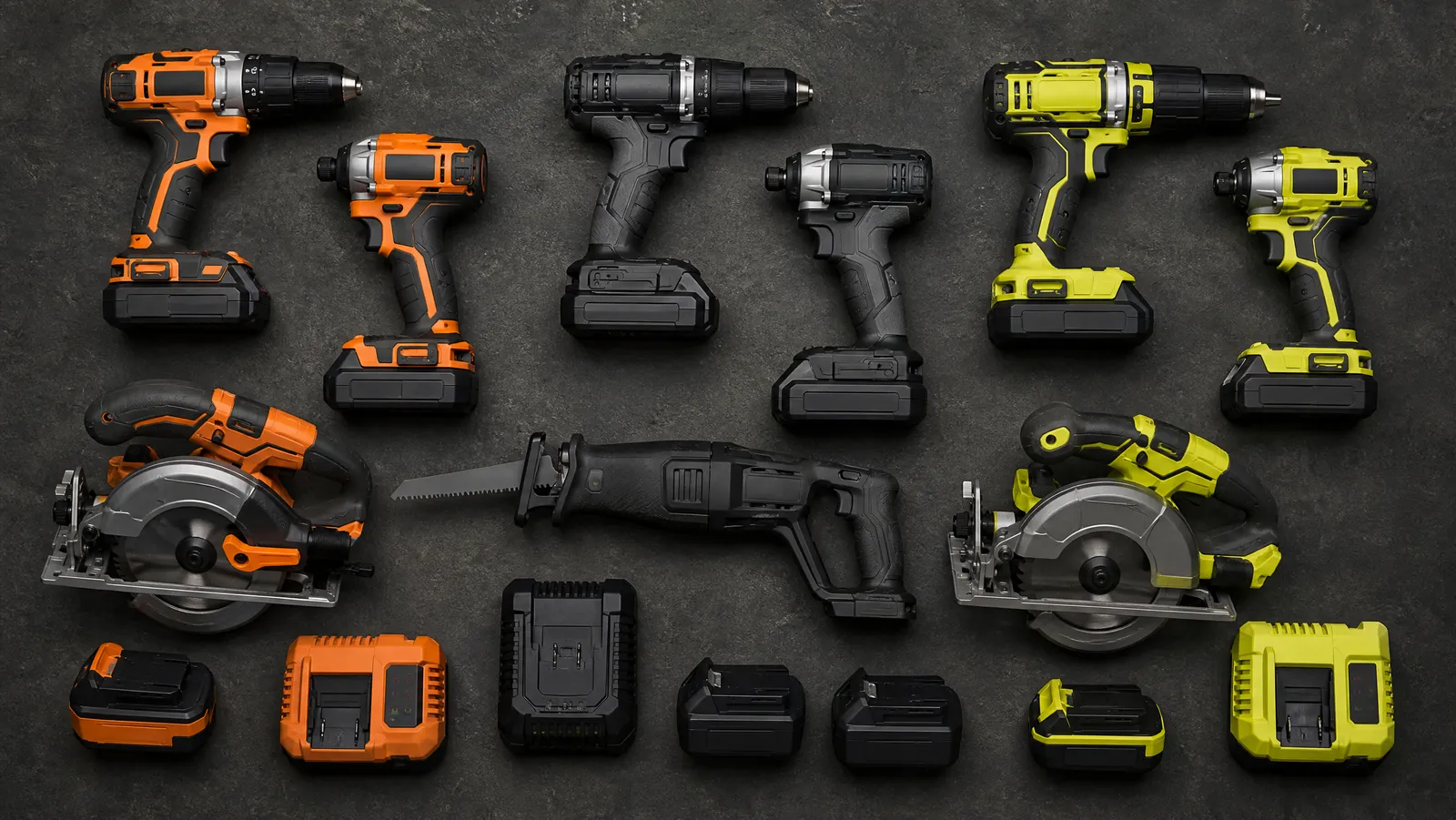
Here are the four kits we recommend most, from a do-everything six-tool bundle to a featherweight two-tool pair. Each one plugs you into a major battery platform, so every future tool you add shares the same batteries.


Drag to compare all 4 →
For most beginners the decision comes down to three shapes. Buy the Ryobi ONE+ 6-tool kit if you want the most tools for your money in one box. Buy the DeWalt drill-and-impact pair if you'd rather own two excellent tools than six average ones. And if weight and build quality matter more than a big bundle, look at Makita's compact LXT set. If you're still building out your hand tools too, our guide to essential DIY tools covers the non-powered basics that belong in the same drawer.
Each pick is chosen for a different buyer, not ranked one-to-five. The Ryobi P1819 is our best overall value because it turns one purchase into a whole workshop. The DeWalt DCK240C2 is the best starter pair — the two tools you'll use most, nothing you won't. The DeWalt DCK277D2 is the same pair with brushless motors, our pick if you want maximum runtime and lifespan. And the Makita CT225SYX is the compact choice, for anyone who'll be working overhead or all day and wants the lightest, most comfortable tools.
As a rough budgeting guide, expect the two-tool DeWalt kit to land around $149, the brushless DeWalt near $169, the Makita compact set around $199, and the six-tool Ryobi bundle near $260 (all approximate, as of July 2026 — prices move with sales). Notice the pattern: buying two brushed tools costs the least, and every step up buys you either more tools or better motors, not raw power. That's the whole game in cordless DIY — you're really choosing how many jobs and how long a runtime, not chasing horsepower.
Start with a combo kit
For a first-time buyer, a combo kit is almost always the smart move over piecing tools together one at a time. You get matched tools, at least two batteries, a charger and a bag — usually for far less than buying the same pieces separately. We go deep on this in our full guide to the best cordless power tool combo kits for beginners, but the short version is simple: a good kit removes every "which battery, which charger?" decision and gets you working the day it arrives.
Our top overall pick is the Ryobi ONE+ six-tool bundle. It's the fastest way to go from zero to a genuinely complete kit, and it opens the door to a huge accessory ecosystem.

Ryobi ONE+ 6-Tool
Six ONE+ tools plus two batteries on a 125-plus-tool platform — the single best way for a DIYer to go from zero to a full cordless kit in one purchase.
Pros
- Six tools cover drilling, driving, cutting and demolition
- Works with any RYOBI ONE+ 18V battery — over 125 tools in the system
- Comes with a 4.0Ah and a 1.5Ah battery, charger and bag
Cons
- Brushed motors are less efficient than brushless
- Consumer-grade rather than jobsite-tough
If you'd rather start lean, the two-tool DeWalt kit gives you the two most useful cordless tools ever made and nothing you won't use. These are the cordless power tools worth owning first, and everything else you buy later can hang off the same 20V MAX batteries.

DeWalt DCK240C2
If you buy just two cordless tools, buy these: a 1/2-inch drill/driver and a 1/4-inch impact driver, with two batteries, on DeWalt's huge 20V MAX platform.
Pros
- The two tools you'll use most, in one kit
- Compact — the impact driver is 5.55 in. and 2.8 lbs
- LED work lights and a 3-year limited warranty
Cons
- Brushed motors
- Compact batteries suit light-to-medium work
Both approaches are correct — the Ryobi maximizes how many jobs you can tackle on day one, while the DeWalt maximizes quality per tool. If you already know you'll be building furniture and cutting sheet goods, the six-tool kit earns its keep fast. If you mostly hang shelves, assemble flat-pack and fix things around the house, the drill-and-impact pair is all you need.
When you're weighing kits, a few things separate a good bundle from a padded one:
- At least two batteries. One charges while the other works, so you're never stopped. Kits with a single battery are a false economy.
- A real charger, ideally a fast one. A standard charger can take an hour or more; a fast charger tops a compact pack up in 30–45 minutes.
- The right tools, not the most tools. A saw you'll never use doesn't make a six-tool kit better than a two-tool kit. Count the tools you'll actually reach for.
- A bag or case. It sounds minor, but the tools you can grab and carry in one trip are the tools you'll actually use.
Skip the giant "homeowner" sets stuffed with pieces you'll never touch. A tight kit of the right tools, on a platform you can grow, beats a big box of mediocre ones every time.
The two tools to master first: drill and impact driver
If you own nothing, buy a drill/driver and an impact driver — in that order of importance, though most people buy them together. The drill makes clean holes and, with its adjustable clutch, drives screws without over-tightening. The impact driver exists for one job the drill struggles with: sinking long screws and lag bolts into hard material without wearing out your wrist.
The mechanical distinction matters, and it's worth understanding the difference between an impact driver and a drill before you spend a dollar. According to Pro Tool Reviews, a drill delivers steady, constant rotational torque, while an impact driver adds short bursts of extra force — an internal hammer striking an anvil thousands of times per minute — which is what lets a small, 2.8-pound tool drive fasteners a much heavier drill would stall on. The trade-off: an impact driver's quick-change hex chuck only takes 1/4-inch bits, and it's too aggressive for delicate work or drilling precise holes.
In practice, here's how the two split the work:
- Reach for the drill to bore holes of any size (wood, drywall, metal, masonry with a hammer drill), to drive screws where you need control — like hinges, cabinet hardware, or anything that could strip — and for accessory jobs like mixing paint or sanding with an attachment.
- Reach for the impact driver for long deck screws, structural screws, lag bolts, and driving lots of fasteners fast without your wrist paying for it. Its bursts of torque also break loose stubborn, seized screws a drill would just cam out of.
A common upgrade question is the hammer drill — a drill with an added forward hammering action for boring into brick and concrete. It's genuinely useful if you'll be anchoring into masonry, but it's not one of the first two tools a general DIYer needs; a standard drill/driver plus an impact driver covers the overwhelming majority of home jobs. Add a hammer drill (or a dedicated rotary hammer) only when a masonry project actually calls for it.
For DIY, the honest answer is that you want both a drill and an impact driver, and a two-tool kit is the cheapest way to get them. When you're ready to compare individual drivers on power, size and battery life, our roundup of the best cordless impact drivers for DIY breaks down the field. And because the drill is the one power tool nobody should skip, start with our guide to the best cordless drills for DIY.
Batteries, voltage and platforms, explained
The single most confusing part of buying cordless is the voltage label, so let's get cordless power tool batteries explained in plain terms. According to Pro Tool Reviews, "18V" and "20V MAX" describe the same battery: 18V is the nominal voltage the pack runs at under load, while 20V MAX is the peak, no-load voltage straight off the charger. Both are built from five lithium-ion cells wired in series; one brand simply markets the higher number. There is no meaningful power difference between an 18V and a 20V MAX tool.
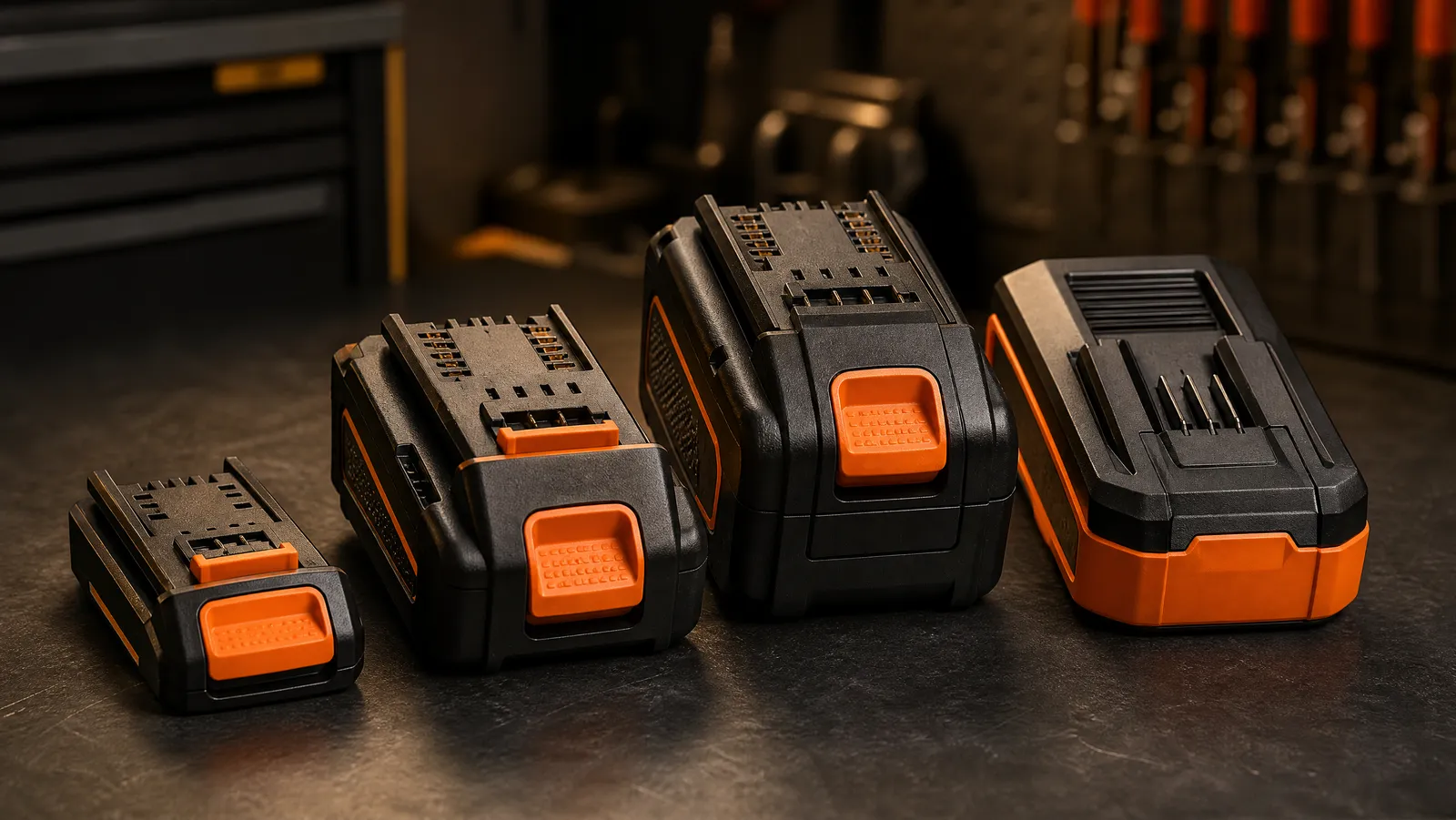
What actually changes how a tool feels is amp-hours (Ah) — the battery's fuel-tank size. A 4.0Ah pack runs roughly twice as long as a 2.0Ah pack before it needs charging, but it's heavier and costs more. For general DIY, a 2.0Ah battery keeps the tool light for overhead work, while a 4.0Ah is nice for longer sessions or hungry tools like saws. That's why the Ryobi kit above pairs a compact 1.5Ah pack with a larger 4.0Ah one.
Chargers matter more than beginners expect, too. A standard charger trickles a compact battery back to full in an hour or more; a fast charger does it in roughly half that and often has fans to cool a hot pack first. If your kit includes only a slow charger, a second battery is the cheapest way to eliminate downtime — while one drives screws, the other refills. Owning two batteries and never running dry is a bigger real-world upgrade than chasing a slightly higher voltage number.
The word that should drive your decision, though, is platform. Every battery only fits its own brand's family — DeWalt 20V MAX, Ryobi ONE+, Makita LXT, Milwaukee M18 — and switching later means re-buying batteries. The upside of committing is enormous selection: Ryobi says its 18V ONE+ system now spans more than 300 tools that all share one battery. Pick the platform first, and every tool after your first kit gets cheaper because you can buy the bare body and reuse batteries you already own. It's the reason we keep repeating it: your first kit is really a vote for a battery, and the battery outlives every tool it powers.
Brushless or brushed? Corded or cordless?
Two more either/or questions trip up beginners. First, motor type. Understanding brushless versus brushed motors is worth a minute: a brushed motor uses carbon brushes that physically rub to transfer power, while a brushless motor uses electronics instead, cutting friction and heat. According to Bob Vila, a brushless tool can run roughly 30–50% longer on a single charge than the same tool with a brushed motor — and with no brushes to wear out, it typically lasts longer too. Brushless motors are also generally more efficient, running at roughly 85–90% versus 75–80% for a brushed motor.
Does a DIYer need brushless? Not strictly. A brushed kit like the DeWalt DCK240C2 is plenty for occasional use and saves you money. But if you'll use the tools often or want the longest runtime and lifespan, the small step up to the brushless DeWalt DCK277D2 pays off over time.
Second, power source. Weighing corded versus cordless power tools used to be a real debate; today, modern lithium batteries have closed most of the gap for DIY. Cordless wins on convenience, portability and safety (no cord to cut), and it's what we recommend for nearly every homeowner. Corded still makes sense for a handful of high-draw, run-for-hours tools — a big benchtop saw, a paint-stripping heat gun, a shop vac — where you never want to think about a battery. For everything you carry around the house, cordless is the default.
Picking a brand and battery system
There's no single answer to the best cordless power tool brand for DIY — there's only the best platform for you, because your first kit locks you into an ecosystem. As ToolRecon and other reviewers point out, batteries aren't interchangeable between brands, so the practical cost of switching later is buying all-new batteries. Choose deliberately now and future purchases stay cheap.
Here's how we'd steer a beginner:
- Ryobi ONE+ — the value and selection champion. Best if you want the most tools (indoor and outdoor) for the least money and don't need jobsite toughness.
- DeWalt 20V MAX — the safe, everywhere-available all-rounder. Huge tool range, tough, easy to find batteries anywhere.
- Makita LXT — the comfort-and-quality pick. Lighter, refined tools with a deep professional lineup; our favorite if ergonomics matter.
- Milwaukee M18 — the enthusiast/pro-leaning choice with excellent high-demand tools, usually at a premium.
For most DIYers, Ryobi or DeWalt is the right starting point: Ryobi if budget and breadth lead your list, DeWalt if you want maximum availability and a slightly tougher tool. Whatever you pick, buy your first kit on that platform, then grow it one bare tool at a time.
Cordless tools for woodworking
Once the drill and impact driver are handled, woodworkers tend to want a few more cordless tools — and the good news is they all run on the battery platform you already chose. When you're ready to expand, our dedicated guide to the best cordless power tools for woodworking goes tool by tool; here's the short list of what to add and why.
- Circular saw — your first cutting tool for breaking down plywood and boards. A cordless one is freeing for garage and job-site work alike.
- Jigsaw — for curves, notches and cutouts a straight saw can't manage.
- Random orbital sander — turns rough lumber into finish-ready surfaces without swirl marks.
- Brad nailer — cordless nailers have become a game-changer for trim, cabinets and small builds, with no compressor or hose to drag around.
- Compact router — for edges, dados and light joinery once your projects get more ambitious.
You don't need any of these on day one. Add them as specific projects demand — building a bookshelf calls for the saw and sander; installing trim calls for the nailer. That project-driven approach keeps you from buying tools that gather dust.
Two things separate frustrating woodworking from clean, accurate results, and neither is the tool itself. The first is blades and bits: a sharp, task-appropriate blade in a modest saw beats a dull blade in an expensive one every time, so budget for a good crosscut blade, a plywood blade, and quality driver bits. The second is that cordless hasn't fully replaced every corded shop tool. A table saw or a large thickness planer still runs best on a wall outlet, where it can pull steady power for long, continuous cuts. For handheld, move-around-the-shop work, though, today's cordless saws, sanders and nailers are more than capable — and they keep you on the same battery you already own.
Storing and charging your tools
A little care doubles the life of your investment, so it's worth picking up a few cordless tool storage and charging ideas early. The biggest wins are about the batteries, which are the most expensive part of any cordless system.
- Store in the sweet spot. Battery makers like Stihl recommend keeping packs around 40–60% charge in a cool, dry place rather than fully drained or fully topped up for long stretches — it dramatically slows aging.
- Mind the temperature. According to Battery University, consumer lithium-ion cells should never be charged below freezing (32°F / 0°C), and heat above about 86°F speeds up wear — so a cold garage in winter or a hot car in summer is the worst place to leave them.
- Take the battery off the tool for long storage, and keep charged packs out of direct sunlight.
- Keep it together. A wall of pegboard hooks, a French cleat, or the tool bag your kit came in all beat a tangled bin. When each tool has a home, you actually use them.
It helps to build a tiny charging station: mount the charger to a wall or shelf near an outlet, keep spare batteries beside it, and make that one spot the home for anything that needs juice. You'll always know where a charged pack is, and you'll stop discovering a dead battery the moment you need it. Pair that with a simple tool wall — pegboard, a French cleat rail, or a few labeled bins — and your kit stays visible, which is the real secret to actually using it.
A simple habit — pull batteries when you're done, park them half-charged on a shelf between projects — is the single cheapest way to make a cordless kit last many years. Do that, keep them out of the heat and cold, and a good set of tools will outlast the projects you bought them for.
Explore the full series
- The 6 Best Cordless Power Tool Combo Kits for Beginners (2026) — The best beginner combo kits, from a two-tool DeWalt starter to a six-tool Ryobi ONE+ set.
- Cordless Power Tool Batteries Explained: Voltage, Amp-Hours & Platforms (2026) — Voltage, amp-hours and platform lock-in in plain English before you buy.
- The Best Cordless Impact Drivers for DIY (2026) — Five impact drivers compared on torque, size and battery platform, starting at a $65 bare tool.
- Impact Driver vs Drill: What's the Difference and Which Do You Need? — What each tool actually does, which jobs need which, and why you will eventually want both.
- Brushless vs Brushed Power Tool Motors: What DIYers Need to Know — What the brushless label actually buys you, and when a brushed tool is still the smarter purchase.
- Corded vs Cordless Power Tools: Which Should a DIYer Buy? — Where cordless has genuinely won, where a cord still wins, and the bare-tool price trap.
- Best Cordless Power Tool Brand for DIY: DeWalt vs Milwaukee vs Ryobi vs Makita — DeWalt, Ryobi, Milwaukee and Makita compared as battery platforms, not as individual tools.
- 8 Must-Have Cordless Power Tools for DIY Homeowners — The eight cordless tools worth owning, in the order a homeowner should actually buy them.
- The Best Cordless Power Tools for Woodworking (2026) — The saw, sander, jigsaw, router and nailer worth adding, in the order we would buy them.
- Cordless Tool Storage & Charging Station Ideas for Your Garage — Five garage setups from free scrap plywood to a wall rack, plus how to store packs properly.
Frequently asked questions
What cordless power tools should a beginner buy first?
Buy a drill/driver and an impact driver, ideally as a two-tool combo kit so they share batteries and a charger. The drill makes holes and drives screws with control; the impact driver sinks long fasteners without wearing out your wrist. Those two cover the large majority of home projects. Add a circular saw, jigsaw or sander later, as specific projects call for them.
Is 18V or 20V MAX better?
Neither — they're the same thing. "18V" is the nominal voltage a pack runs at under load and "20V MAX" is the peak voltage off the charger, but both describe the identical five-cell battery. Ignore the marketing number and compare tools on amp-hours (runtime), weight, features and how big the brand's battery platform is.
Which brand should I buy into?
Pick the platform whose tools you'll actually want long-term, because your batteries won't move between brands. For most DIYers we'd start with Ryobi ONE+ (best value and the widest selection) or DeWalt 20V MAX (tough, available everywhere). Makita LXT is the pick if lightweight, refined tools matter most. Commit to one, then grow it by buying bare tool bodies that reuse your batteries.
Are cordless tools powerful enough for DIY?
Easily. Modern lithium-ion tools have closed nearly all of the old gap with corded models for home use, and a brushless motor can even run 30–50% longer per charge. Corded still makes sense for a few run-for-hours, high-draw tools like a benchtop saw or shop vac, but for everything you carry around the house, a good cordless kit has all the power a DIYer needs.
About the Author
Cheryl Thompson
Cheryl Thompson is the tools editor at The DIY Tool Review. A lifelong fixer and self-confessed tool addict, she has spent years buying, borrowing and wearing out hand and power tools across home renovation, furniture building and everyday repairs. She writes hands-on, no-nonsense reviews to help fellow DIYers spend their money on the tools that actually last.