Brushless vs Brushed Power Tool Motors: What DIYers Need to Know
Brushless vs brushed power tools, settled in plain English: what the two motors actually do differently, what that changes at the chuck, and the honest answer to whether the brushless drill is worth the extra money for the way you work.

- Category
- Power Tools
- Tools tested
- 2
- Read time
- 12 min
- Updated
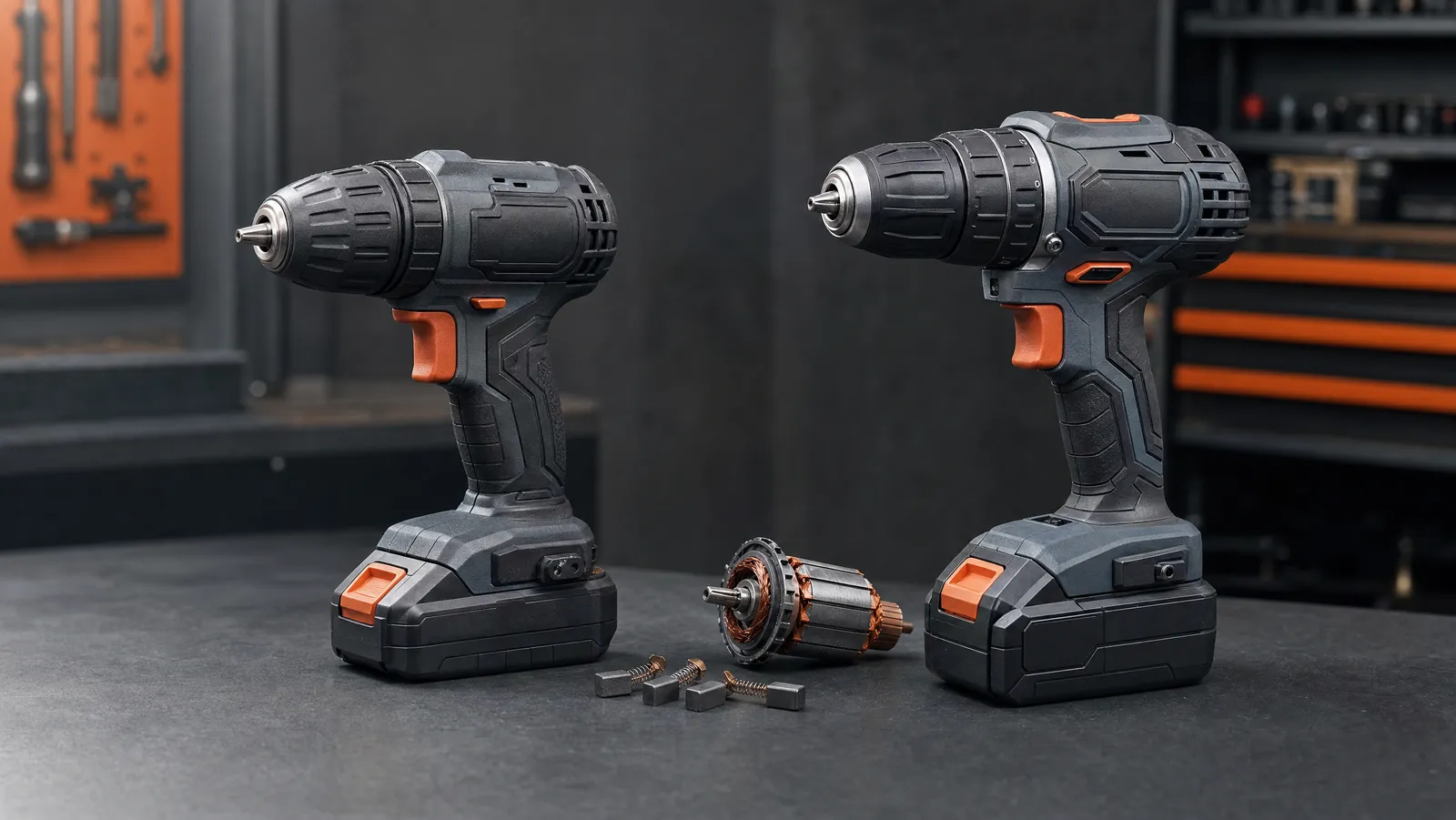
The difference between brushless vs brushed power tools is one piece of physical contact. A brushed motor presses two carbon blocks against a spinning commutator to flip the current as the shaft turns. A brushless motor does that same switching electronically, with nothing rubbing. Less friction means less heat, more of the battery's energy reaching the chuck, and no brushes to wear out.
That single change is why the brushless drill on the shelf costs $80 more than the brushed one beside it. Whether that $80 is worth it depends far less on the motor than on how often and how hard you pull the trigger. Below is the mechanism in plain English, then the buying call — and if you're building a kit from scratch, our guide to choosing cordless power tools for DIY covers the rest.
The short answer
How a brushed motor works
A DC motor has to keep reversing the current in its windings, or the shaft would snap to one position and stop. A brushed motor does that mechanically. According to Bob Vila, "brushes are fitted that rub against the commutator," with one brush carrying a positive charge and the other negative. As IBT Industrial Solutions puts it, those brushes "are in charge of the polarity shifts," contacting rotating electrodes on the commutator that switch the electromagnet's polarity as it spins.
Picture a rotary switch flipping thousands of times a minute with two spring-loaded carbon blocks dragging across it. Simple, century-old, and it works — but it carries three built-in costs.
Friction. Bob Vila notes that a brushed motor's brushes "cause friction, meaning that some of the energy they supply is used to overcome that friction." Energy spent rubbing never reaches the bit.
Sparking. Brushed motors, Bob Vila adds, "can cause sparks, especially as the brushes wear and contact grows inconsistent."
Wear. The brushes are a consumable part, deliberately softer than the commutator so they take the damage instead. InstrumentationTools lists the symptoms of brushes near the end of their life — sparking, a drop in power, a burning smell, visible crumbling or discolouration — and calls them "some of the easiest parts to replace in power tools."
How a brushless motor works
A brushless motor solves the same problem with electronics. Bob Vila describes the swap plainly: an electronic circuit called an inverter replaces the brushes and commutator, producing "a single, continuously revolving magnetic field around the armature." Lowe's buying guide describes a brushless tool as having a rotor that holds the permanent magnets, with an electronic controller and sensors that read where those magnets are and adjust the current supply automatically — the magnets spin, the copper stays put, the reverse of a brushed layout.
In practice, every brushless tool contains a small circuit board a brushed tool doesn't need. Ryobi says its brushless motors rely on "high-efficiency solid-state electronics (MOSFETs) and magnets to generate power." That board also has to track where the rotor is to time the pulses, which brushless designs generally manage with position sensors or by reading the motor's own electrical feedback.
The headline is simple: the electronics replace a mechanical part. Nothing drags, nothing sparks, nothing wears out. You've traded a cheap consumable for a chip.
What that actually changes at the chuck
Here's the honest list of what the swap buys you, with one caveat: the numbers quoted for this are all over the map.
Efficiency. According to IBT Industrial Solutions, brushed DC motors run at roughly 75 to 80 percent efficiency while brushless designs reach 85 to 90 percent. That's a general DC-motor comparison rather than a drill test, but the direction isn't in dispute: less of the battery is wasted before it reaches the bit.
Runtime per charge. Treat this figure carefully. Bob Vila estimates a brushless drill "might run anywhere from 30 to 50 percent longer than the same cordless drill fitted with a brushed motor." Other brands and retailers publish everything from the low twenties to well past fifty percent, usually with no test protocol attached — read them as estimates, not measurements. If runtime is your actual complaint, a bigger battery fixes it more directly and often more cheaply; cordless power tool batteries explained covers what amp-hours really buy you.
Heat, noise and size. IBT notes that brushless motors "reduce friction, heat generation, electrical arcing, noise, and vibrations," and Lowe's adds that a brushless motor "can be more compact and lighter than a comparable brushed motor." A cooler tool throttles back less on a long job, and a shorter one reaches into more places.
Motor lifespan. IBT puts the operating life of a brushed motor at 1,000 to 8,000 hours against 10,000 to 100,000 hours for a brushless one — industrial DC figures rather than drill ratings, but even the bottom of the brushed range is a great many weekends.
Electronic extras. A brushless tool already has a control board, so brands can layer features onto it. DeWalt's DCD801H1 uses an ANTI-ROTATION system that senses excessive rotational motion and shuts the tool down — a feature with nowhere to live in a plain brushed drill.
Brushed vs brushless at a glance
One thing jumps out: brushless wins every row except price. So why is this a debate at all? Because for many people, the rows brushless wins are rows they never notice. If your drill lives in a cupboard and comes out to hang a shelf, you'll never run a battery flat, never cook the motor, never get within sight of worn brushes — but you'll definitely notice the extra $80 at the till. Brushless is better the way a 200 mph car is better: real, measurable, and mostly irrelevant to the school run.
What you give up, honestly
You pay more up front, and often a lot more. Bob Vila's assessment is that a brushed tool "might offer very similar features and comparable performance for as little as half the price." That gap is the whole argument.
You lose a cheap repair. Nobody mentions this one. Brushes are the part of a brushed motor that predictably fails, and they're designed to be swapped — InstrumentationTools calls them among the easiest parts to replace in a power tool. A brushless motor's control electronics are the opposite. Lowe's own buying guide notes that a brushless motor is more complex, "so any repairs to the motor will be more complicated," and that the electronics make it "more vulnerable to harsh operating conditions." Worn brushes are a cheap fix; a dead controller usually means a new tool.
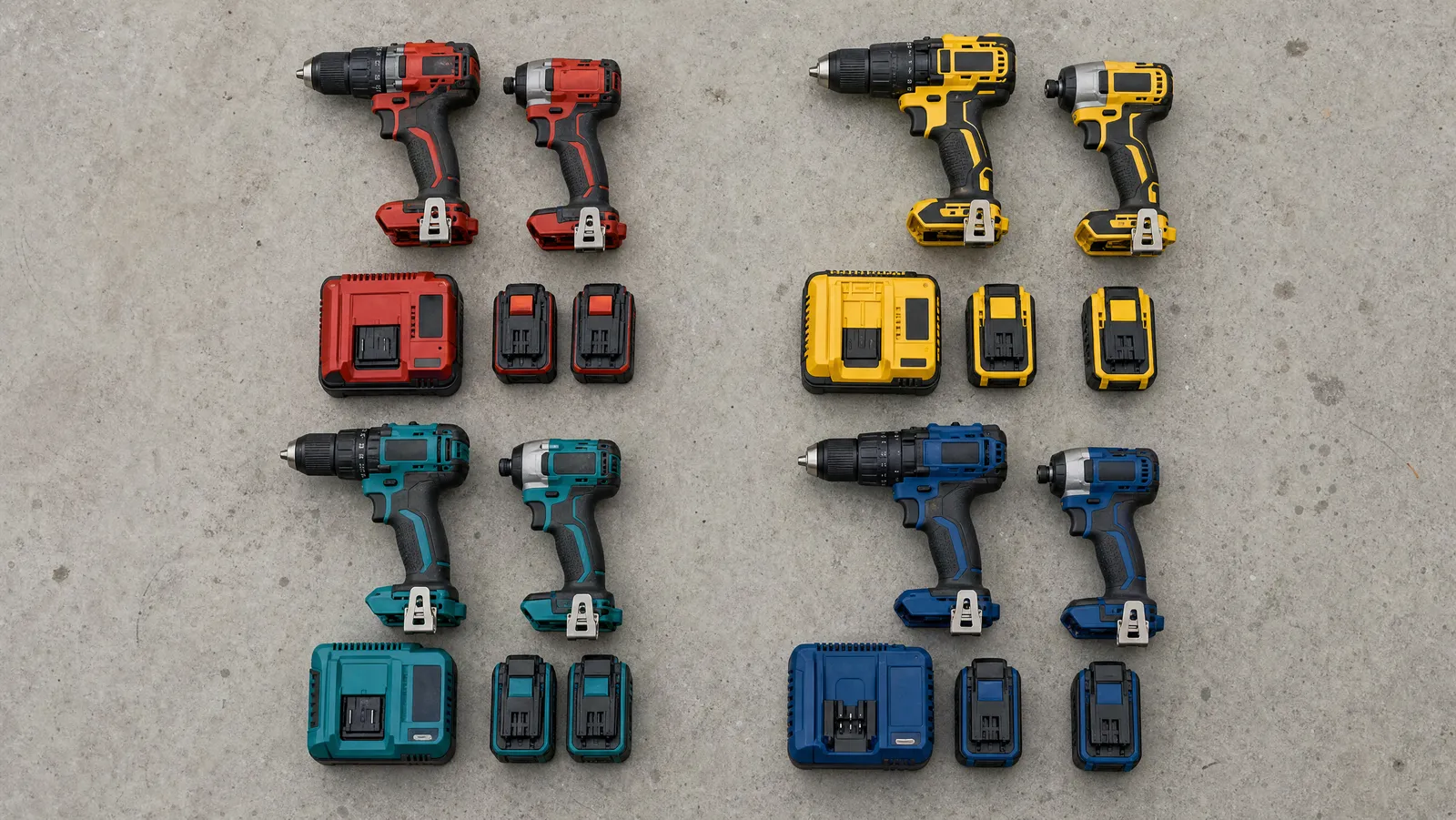
A brushless bare tool on a platform you don't own is a false economy. That tempting "tool only" price assumes you already have batteries and a charger. If you don't, you're buying a whole platform, and the motor type is the smallest line on the receipt.
And it doesn't settle the corded question. Brushed versus brushless is an argument inside the cordless world. Whether you should be cordless at all — for continuous sanding, say — is a separate call we work through in corded versus cordless power tools.
So is brushless worth it for you?
The occasional DIYer. Flat-pack furniture, picture hooks, a shelf, the odd repair — an hour of trigger time a month. Buy brushed and spend the difference on a second battery. Never waiting on a charger will do more for you than an efficiency gain you'll never exhaust. Ryobi says the same about its own range: "Go with a brushed tool if you're a casual DIYer working on simple home projects and repairs." When the manufacturer talks you down the range, listen.
The every-weekend renovator. Decking, a garden office, refitting a room, hundreds of screws at a time. Buy brushless for the two or three tools you use hardest — drill, impact driver, circular saw — and stay brushed on occasional-use kit. That's where runtime and heat actually show up in your day; our pick of the best cordless impact driver for DIY is a good place to start.
The person buying a first kit. Ignore the motor for a minute. The decision that costs you real money over ten years is which battery platform you commit to, because every tool you add later has to fit those packs. Pick the ecosystem first, then buy whatever motor your budget allows inside it — we compare the big ones in the best cordless power tool brand for DIY.
If you're buying one
To keep this a fair fight, both picks are the same brand and tool class — a DeWalt 20V MAX 1/2-inch drill/driver kit — one brushed, one brushless. That isolates the motor. We haven't tested these ourselves; our selection is based on manufacturer specs, price and availability as of August 2026.
The brushed option: DeWalt DCD771C2
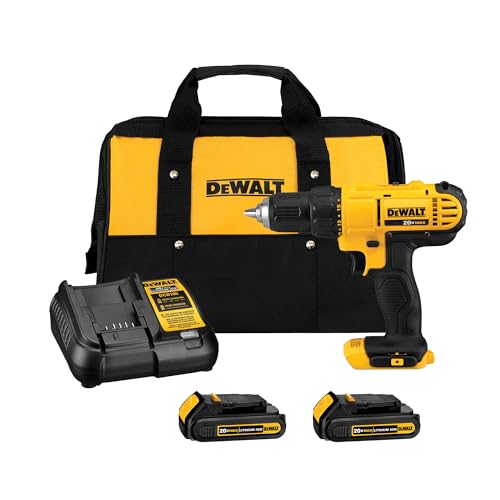
DeWalt DCD771C2
The plain brushed DeWalt drill/driver kit: two speeds, two small batteries and a bag, at $119 as of August 2026.
Pros
- Ships with two 1.3Ah batteries, so one is always charging while you work
- Two-speed transmission (0-450 and 0-1,500 rpm) covers normal DIY drilling and driving
- Compact, lightweight body that DeWalt designs to fit into tight areas
Cons
- DeWalt states it is not suitable for drilling concrete or masonry, or for heavy-duty industrial use
- Carbon brushes are a wear part that eventually needs replacing
At $119 as of August 2026, this is the drill most people actually need. DeWalt rates it at 300 unit watts out through a two-speed transmission of 0-450 and 0-1,500 rpm, with a 1/2-inch single-sleeve ratcheting chuck and a compact body designed to fit tight areas. Critically for a beginner, it ships with two 1.3Ah batteries, a charger and a bag — one pack is always charging while the other works. DeWalt states it suits home repairs and DIY, light construction, and drilling and driving in wood, plastic and light metal, but specifically not concrete, masonry or heavy-duty industrial use. Know that boundary and this kit sits comfortably inside it.
The brushless option: DeWalt DCD801H1

DeWalt DCD801H1
The same 20V MAX drill class with a brushless XR motor, faster rated speeds and one big 5.0Ah POWERSTACK pack, at $199 as of August 2026.
Pros
- Higher rated speeds than the brushed kit at 0-650 and 0-2,000 rpm
- DeWalt's ANTI-ROTATION system shuts the tool down if it senses excessive rotational motion
- Metal ratcheting chuck and a 70-lumen three-position LED worklight
Cons
- $80 more than the brushed kit and ships with only one battery
- The motor control electronics are not a part you can service yourself
The brushless XR version is $199 as of August 2026, down from a $249 list price. The spec-sheet difference you can point at is speed: DeWalt publishes 0-650 and 0-2,000 rpm here against 0-450 and 0-1,500 rpm on the DCD771C2. You also get a metal ratcheting chuck, a three-position 70-lumen LED worklight with auto-shutoff, Tool Connect chip readiness and the ANTI-ROTATION system. The battery difference is a real trade-off, not a footnote: this kit includes one 5.0Ah POWERSTACK pack against two 1.3Ah packs in the brushed kit. One big battery runs far longer but leaves you nothing to swap to; two small ones mean shorter stints and no downtime.
The bottom line
Brushless is the better motor — that was never the question. The question is whether it's the better purchase for you, and for a weekend DIYer whose drill comes out twice a month, it usually isn't: a brushed tool plus a spare battery beats a brushless tool with a flat one. Use it hard, use it weekly, or keep it a decade, and the maths flips. Work out which you are, then shop — and when you're filling out the kit, our cordless power tools hub covers what to buy in what order.
Frequently asked questions
Do brushless tools last longer?
The motors generally do. IBT Industrial Solutions puts the operating life of a brushed DC motor at 1,000 to 8,000 hours against 10,000 to 100,000 hours for a brushless one, because there's no contact wear. Those are broad industrial figures rather than drill ratings, and most DIY tools are retired for other reasons — a dead battery platform, a broken chuck, a drop off a roof — long before the motor quits.
Can you replace the brushes in a brushed tool?
Usually, yes — it's one of the friendliest repairs in the toolbox. InstrumentationTools describes carbon brushes as among the easiest parts to replace in power tools, and lists the warning signs: sparking, a clear drop in power, a burning smell, and visible crumbling or discolouration on the brush itself. Not every tool has externally accessible brush caps, so check your model's parts diagram first.
Is brushless better for battery life?
For runtime on a single charge, yes. Bob Vila estimates a brushless drill "might run anywhere from 30 to 50 percent longer than the same cordless drill fitted with a brushed motor," though published figures vary widely and rarely come with a test behind them. If runtime is your only complaint, a higher-capacity battery is the cheaper fix.
Are all expensive tools brushless?
No — and it's worth saying out loud, because "brushless" has become shorthand for "premium" in a way the engineering doesn't support. It's a spec, not a quality tier. Plenty of well-built tools from major brands still use brushed motors, including DeWalt's own DCD771C2 above, and plenty of budget tools now advertise brushless motors wrapped in mediocre everything else. Judge the whole tool — chuck, ergonomics, battery platform, warranty — and treat the motor as one line on the spec sheet.
About the Author
Cheryl Thompson
Cheryl Thompson is the tools editor at The DIY Tool Review. A lifelong fixer and self-confessed tool addict, she has spent years buying, borrowing and wearing out hand and power tools across home renovation, furniture building and everyday repairs. She writes hands-on, no-nonsense reviews to help fellow DIYers spend their money on the tools that actually last.