Corded vs Cordless Power Tools: Which Should a DIYer Buy?
Cordless has won for almost everything a homeowner does — but corded still wins on price per unit of power, unlimited runtime and anything bolted to a bench. Here is exactly where each one earns your money, including the bare-tool arithmetic nobody shows you.

- Category
- Power Tools
- Tools tested
- 2
- Read time
- 14 min
- Updated
The honest answer to corded vs cordless power tools is that cordless has already won for almost everything a homeowner does. Buy cordless for the tools you pick up and carry. Buy corded for the tools that live bolted to a bench, for long uninterrupted runs, and when you want the most power per dollar.
You have noticed that corded tools are conspicuously cheaper on the same shelf, and wondered whether you are being upsold. You are half right, and this guide shows exactly where. Our cordless power tools for DIY guide covers the tools themselves.
The short answer
What actually changed
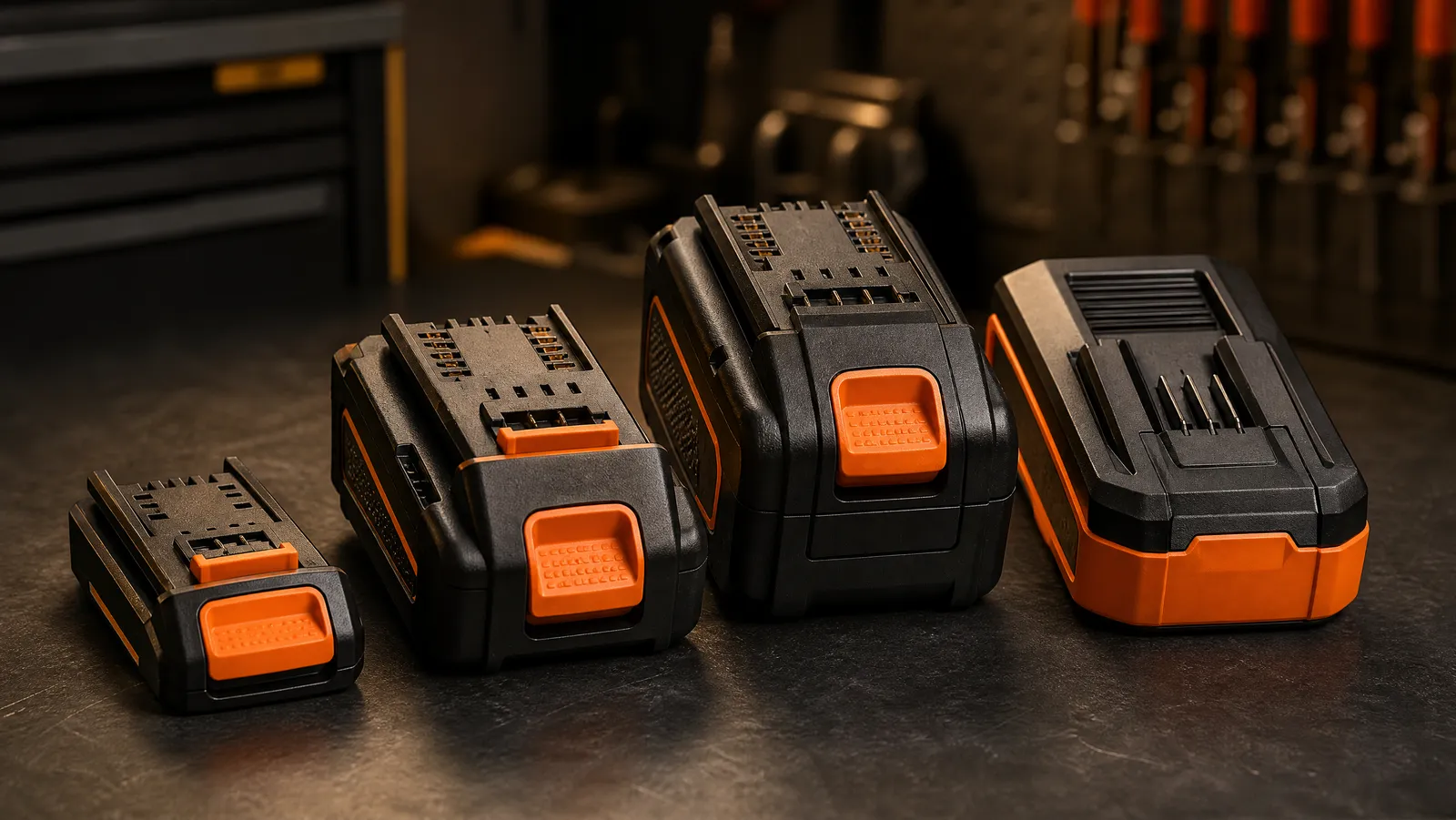
This question had a different answer fifteen years ago, and two pieces of hardware are why: the lithium-ion battery pack and the brushless motor. Lithium packs replaced nickel-cadmium with far more usable energy for their weight, and they hold their charge in storage instead of bleeding it away. Brushless motors then removed the friction losses of carbon brushes, so more of what is in the pack reaches the workpiece.
What that did not do is repeal physics. According to SlashGear's corded-versus-cordless comparison, corded tools draw from a 110V to 240V wall supply while cordless tools are capped by battery voltage — commonly 12V to 54V — and a pack holds a fixed amount of stored energy while an outlet does not. The gap closed far enough that the tools most DIYers carry no longer feel underpowered. It did not vanish.
If the numbers printed on a battery still read like a foreign language, our guide to cordless power tool batteries explained translates voltage, amp-hours and platforms into plain English.
Where corded still wins
Three axes, and they are worth being stubborn about.
Price per unit of power. The lithium-ion pack, the charger and the motor electronics behind brushless versus brushed motors are the expensive parts of a cordless tool. A corded tool needs none of them, so the corded version of a given tool generally costs less for comparable output. That is not a trick — it is a cheaper bill of materials.
Unlimited runtime. Sanding an entire floor, ripping a stack of sheet goods, mixing a bucket of mortar, cutting tile for a whole bathroom, running a shop vacuum through a demolition afternoon. These are jobs measured in hours, not minutes. A cord does not care. A battery does, and swapping packs mid-job is the kind of interruption that turns a two-hour task into a four-hour one.
No battery to age out. Batteries are consumables. According to SlashGear, DeWalt lithium-ion packs last for 300 to 500 charge cycles, which it puts at roughly two to three years if you are not fully draining and fully charging them every time, and capacity fades along the way — the same article gives the example of a year-old pack charging to only about 90 percent of what a new one holds. A corded sander you bought a decade ago still works exactly as well as the day you bought it.
Two smaller points round it out. Corded tools are usually lighter in the hand for the same output, because there is no pack hanging off the base; SlashGear makes that point too, noting cordless tools tend to weigh more precisely because they carry their own power supply. And some tools never move anyway. A table saw, a miter saw station, a drill press, a bench grinder and a shop vacuum all live within a few feet of the same outlet for their entire working lives. Paying a cordless premium for mobility you will never use is the most common way DIYers overspend.
Where cordless wins
Everything else, and mostly for reasons that have nothing to do with power.
The cord creates the problem the cord solves. It snags on the workpiece, drags sawdust across a fresh finish, trips people, and has to be routed somewhere. Half the aggravation of a corded jigsaw is managing the tail behind it.
There is often no outlet. Up a ladder, in a crawl space, on a roof, at the far end of a yard, in a garage you have not wired yet, or in a room where you have deliberately switched the breaker off to work on the wiring. Cordless is not merely more convenient in those places — it is the only option.
Two-minute jobs stay two-minute jobs. Hanging a shelf with a corded drill means finding the outlet, unspooling the cord and coiling it back up afterwards. With a cordless driver you pick it up, drive four screws and put it down. Across a year of small household fixes, that difference is most of the value.
The platform compounds. This is the argument that gets stronger the longer you own the tools. Your first cordless purchase buys a tool, a battery and a charger. Every purchase after that can be tool-only, and the batteries you already own keep earning their keep. That is also why picking the right platform up front matters more than picking the right first tool — our comparison of the best cordless power tool brand for DIY weighs the big names as ecosystems, and our list of must-have cordless power tools covers what to add in what order.
The price comparison nobody shows you
Now the part the shelf tag hides. A corded tool's price is the price of the whole tool. A cordless tool's advertised price frequently is not — it is a bare tool, meaning the tool by itself, with no battery and no charger in the box.
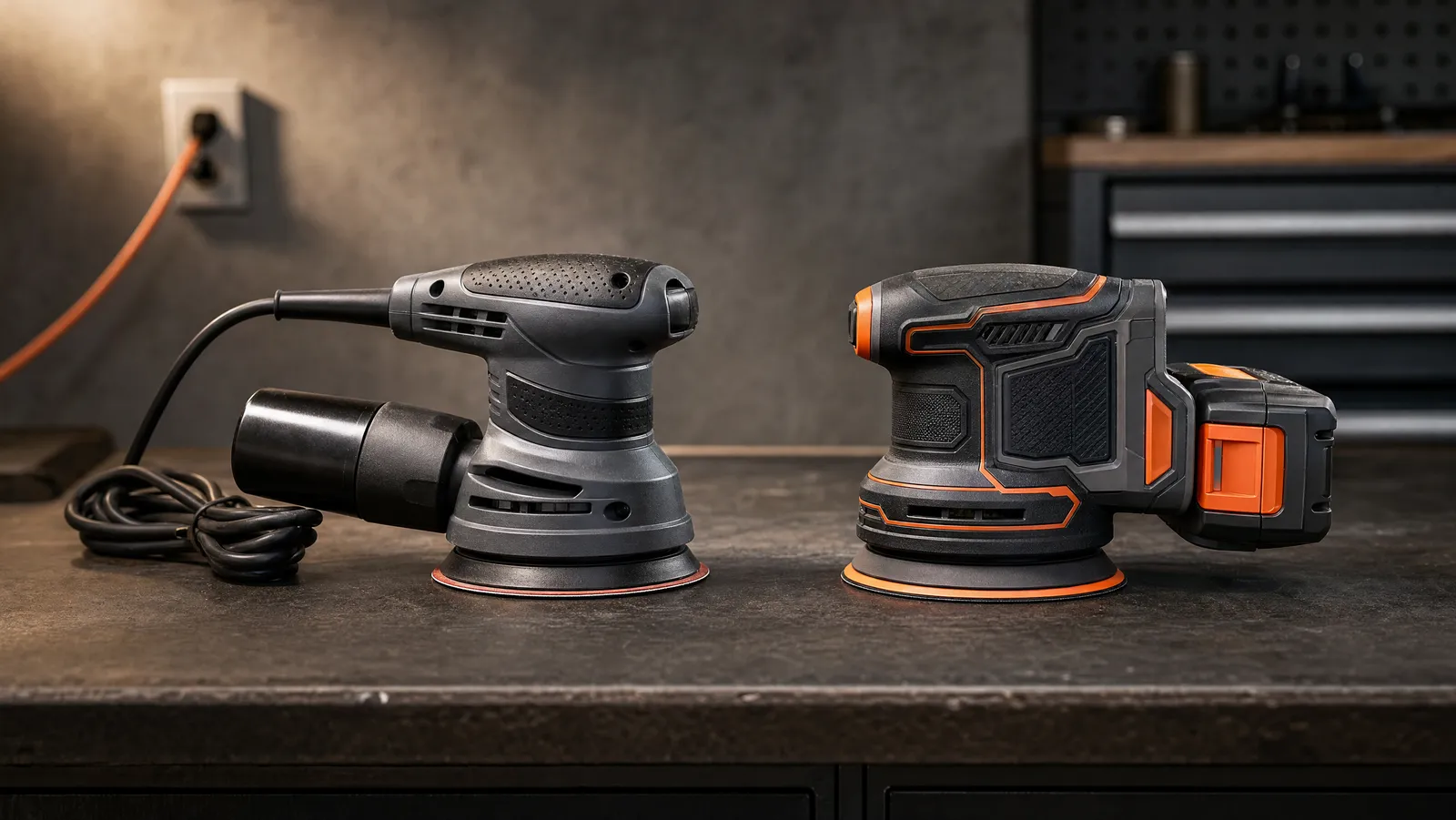
Our two picks make that concrete, and they are deliberately the same tool from the same brand: DeWalt's 5-inch variable-speed random orbit sander, once with a cord and once without.
- The corded DWE6423 is listed at $79.00 as of August 2026. That is a finished sander. Plug it in and sand.
- The cordless DCW210B is listed at $89.99 as of August 2026 — as a bare tool. No battery, no charger.
So the real comparison is not $79.00 against $89.99. It is $79.00 complete against $89.99 plus a 20V MAX battery plus a charger. Framed honestly, corded is not slightly cheaper here; it is dramatically cheaper.
Now the fair point in the other direction, because this cuts both ways. If you already own DeWalt 20V MAX packs — and if you bought a DeWalt cordless drill or combo kit, you probably do — then the bare-tool price is the real price, and $89.99 for a cordless brushless sander that shares batteries with your drill starts to look excellent. Consumer Reports makes the same point in its battery platform buying guide: once you own one tool with a battery, buying the next tool bare from the same platform can save around 25 percent.
That is the whole decision in one sentence. The cordless premium is a one-time entry fee to a platform, not a per-tool tax. Pay it once, deliberately, on the tool you use most. After that, bare tools are the cheap part.
Tool by tool: which to buy
Most of that table is uncontroversial. Two rows genuinely are not.
The circular saw is arguable because it is a high-drain tool that people use in bursts and in awkward places: on top of joists, on a roof, on sawhorses in a driveway. For a weekend of framing or a deck build, a cordless saw and two decent packs is the better tool, and cord management alone justifies it. For a day of breaking down full sheets of plywood on a bench, a corded saw simply does not stop, and you are standing next to an outlet anyway.
The random orbit sander is arguable for the opposite reason: it is a lower-drain tool that tends to run for a long time. Sanding a tabletop or a door is fifteen minutes, and cordless is a pleasure. Sanding a whole floor, a fence, or a set of kitchen cabinet doors is hours, and the cord stops being an annoyance and starts being the advantage. If your projects live at the woodworking end of the spectrum, our guide to the best cordless power tools for woodworking covers where saws, sanders and routers land.
A note on extension cords and safety
If you buy corded, you are also buying an extension cord, and the cord is the component people cheap out on. Two things matter: wire gauge and length. Thinner wire over a longer run means more resistance, less voltage arriving at the tool and more heat in the cable.
The Electrical Safety Foundation International publishes a gauge-by-length guide for exactly this, and its shape is simple: the longer the cord and the higher the amp draw, the thicker the wire has to be. ESFI shows 16-gauge covering only light loads of roughly 1 to 13 amps at 25 to 50 feet, with 12- and 10-gauge listed for 16 to 20 amp loads at those lengths, and 10-gauge for that same 16 to 20 amp range at 100 feet. Read the amp rating on your tool's plate and match the cord to it. ESFI's blunt version is that you should not use a cord with a lower rating than the thing you are plugging into it.
The same sander, both ways
Here is where the argument stops being theoretical. These two picks are the same tool, from the same brand, in both forms, which strips out every variable except the power source. Our selection is based on manufacturer specifications, price and availability rather than hands-on testing.
The corded pick: DeWalt DWE6423

DeWalt DWE6423
A complete 5-inch random orbit sander at $79.00 as of August 2026 — 3-amp motor, variable speed, nothing else to buy.
Pros
- 3-amp motor spins the pad at 8,000-12,000 OPM with variable speed control
- Complete tool, so there is no battery or charger to add to the price
- Separate counterweight cuts vibration; dust port fits DWV010 and DWV012 collectors directly
Cons
- Tied to an outlet, so ladder work and outdoor jobs need an extension cord
- One more cord to manage alongside a dust-extraction hose
DeWalt lists the DWE6423 with a 3-amp motor spinning the pad at 8,000 to 12,000 OPM, a separate counterweight design to reduce vibration, a dust-sealed switch, a shorter body height that lets you get closer to the workpiece, and a dust port that fits its DWV010 and DWV012 collectors directly. At $79.00 as of August 2026 it is a complete sander with nothing else to buy. The case for it is straightforward: if your sanding happens in a garage or shop within reach of an outlet, and some of it runs for hours, this is more sander per dollar, and it will still be running long after a battery platform has moved on to another generation of packs.
The cordless pick: DeWalt DCW210B

DeWalt DCW210B
The same 5-inch sander with a brushless motor and no cord — sold as a bare tool at $89.99 as of August 2026.
Pros
- Brushless motor with the same 8,000-12,000 OPM variable-speed range as the corded version
- No cord to drag across a finish, trail off a ladder or route to an outlet
- Low-profile height and a replaceable 8-hole hook-and-loop pad (DWE64233)
Cons
- Bare tool — battery and charger are sold separately and are not in the box
- Only good value if you already own DeWalt 20V MAX packs and a charger
The DCW210B is the same 5-inch random orbit sander without the cord. DeWalt lists it with a brushless motor and the identical variable-speed range of 8,000 to 12,000 OPM, the same dust-sealed switch, the same one-handed locking dust bag, the same low-profile height and the same dust-collector compatibility, plus a replaceable 8-hole hook-and-loop pad. That matched OPM range is the point. On this particular tool the performance argument is close to a wash, and the real decision is cord versus battery and complete tool versus bare tool. At $89.99 as of August 2026 it ships tool-only, with the battery and charger sold separately.
So which would we buy? If we owned no DeWalt batteries, the corded DWE6423, without hesitating — it is cheaper, complete, and sanding is exactly the long-running job a cord suits. If we already had 20V MAX packs on the shelf, the DCW210B, because at that point the sander costs $89.99 rather than $89.99 plus a whole platform, and sanding a gate at the bottom of the garden without running a lead out of a window is worth more than the cord ever saved us. That is the corded versus cordless question in miniature: build one platform deliberately, buy corded where the cord genuinely costs you nothing, and stop paying the cordless premium out of habit. For the tools worth putting on that platform first, start with our guide to the best cordless power tools for DIY.
Frequently asked questions
Are cordless tools as powerful as corded?
For the work a DIYer actually does, close enough that you will rarely notice — and on some tools, like the two sanders above, DeWalt lists an identical speed range for both. The difference shows up at the extremes: sustained heavy cutting, hard masonry and long production runs. According to SlashGear, a corded tool draws from a 110V to 240V supply while a cordless tool is capped by its battery voltage, commonly 12V to 54V, which is why a gap survives at the top end even though it has largely closed in the middle.
Do cordless tools lose power as the battery drains?
The effect most owners notice is not within a single charge but across the pack's life. According to SlashGear, lithium-ion packs lose capacity as they age — it gives the example of a year-old battery charging to only about 90 percent of a new one — and DeWalt lithium-ion packs last for 300 to 500 charge cycles, which it puts at roughly two to three years if you are not fully draining and recharging them every time. The practical fix is the same either way: own two batteries and keep the spare on the charger.
Is it worth keeping my old corded tools?
Yes. Do not sell them to fund a cordless kit. A working corded tool has no battery to degrade, costs nothing to keep, and covers precisely the jobs where cordless is weakest: long sessions, bench work and high-drain cutting. The smart home workshop is mixed. Keep the corded circular saw for sheet-goods days and buy a cordless one for everything else.
Which tools should I always buy corded?
Anything bolted down or parked in one spot: table saw, miter saw, drill press, bench grinder, bench sander. Anything that runs continuously: shop vacuum, mortar mixer, floor sander. And an angle grinder, if you use one for more than a few cuts at a time. In every one of those cases you are standing next to an outlet anyway, so the cordless premium buys you nothing at all.
About the Author
Cheryl Thompson
Cheryl Thompson is the tools editor at The DIY Tool Review. A lifelong fixer and self-confessed tool addict, she has spent years buying, borrowing and wearing out hand and power tools across home renovation, furniture building and everyday repairs. She writes hands-on, no-nonsense reviews to help fellow DIYers spend their money on the tools that actually last.