Best Cordless Power Tool Brand for DIY: DeWalt vs Milwaukee vs Ryobi vs Makita
There is no single best cordless power tool brand for DIY — there's only the battery platform that fits how much you actually build. Here's how DeWalt, Ryobi, Milwaukee and Makita really differ, and which type of DIYer each one suits.

- Category
- Power Tools
- Tools tested
- 4
- Read time
- 13 min
- Updated
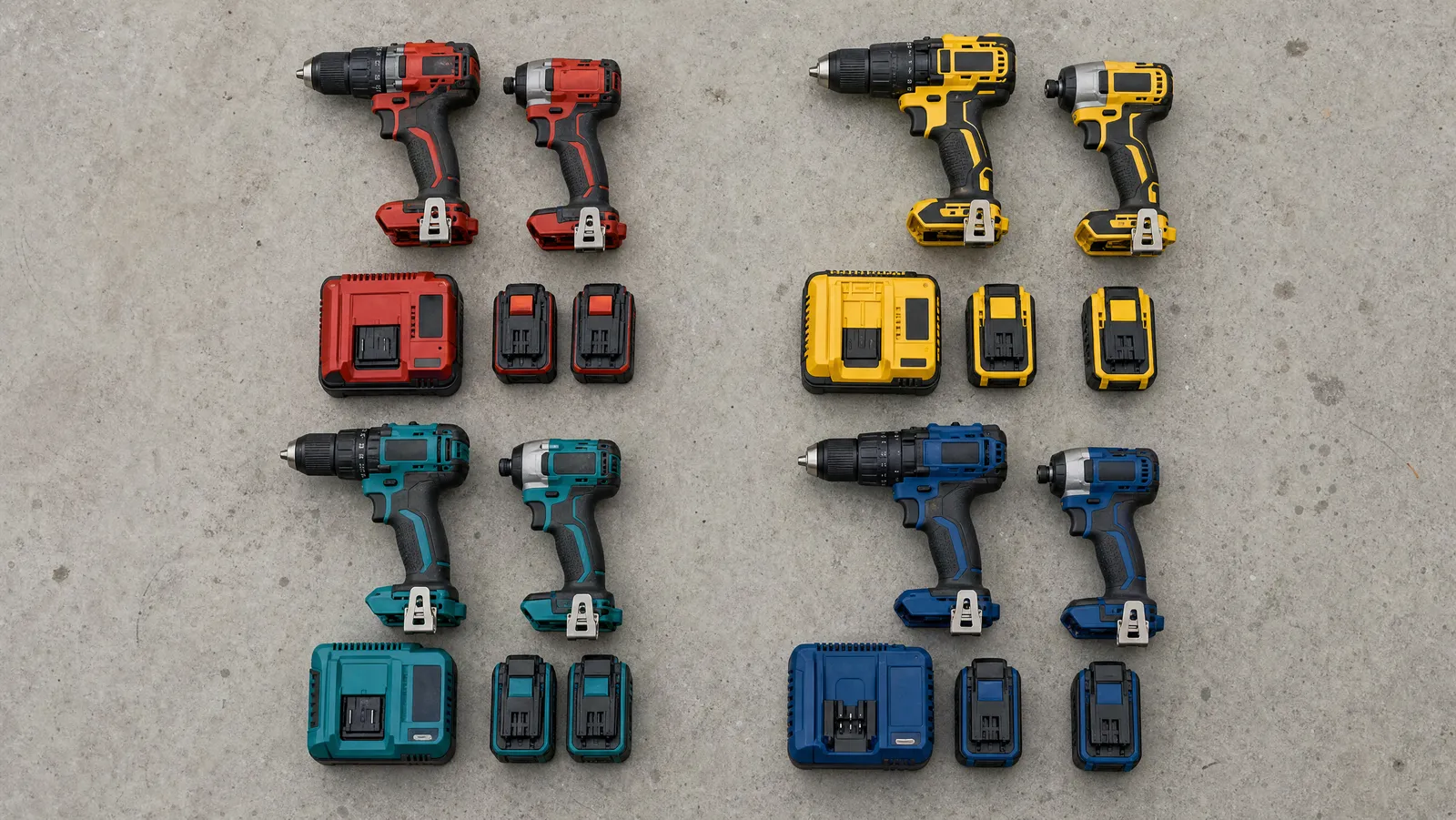
The best cordless power tool brand for DIY is whichever battery platform matches how much you'll actually build. Ryobi ONE+ for breadth and value. DeWalt 20V MAX for the best all-round balance. Milwaukee M18 if you push tools hard. Makita 18V LXT if comfort and weight matter most. All four make a good drill — that was never the decision.
The decision is the battery. You aren't buying a tool, you're marrying a platform, and the first purchase is the cheap one; the next ten are locked in. Below we've matched each of the four big systems to a type of DIYer, using the cheapest sensible kit for each as the way in. For the wider view of which tools are worth owning once you've chosen, start with our guide to the best cordless power tools for home DIY.
Drag to compare all 4 →
Why the brand matters more than the tool
Put any two 18-volt drills from these four brands side by side and you'll struggle to tell them apart in a five-second aisle test. Both drill holes. Both drive screws. The thing that actually shapes the next five years of your garage is the plastic foot on the bottom of the battery.
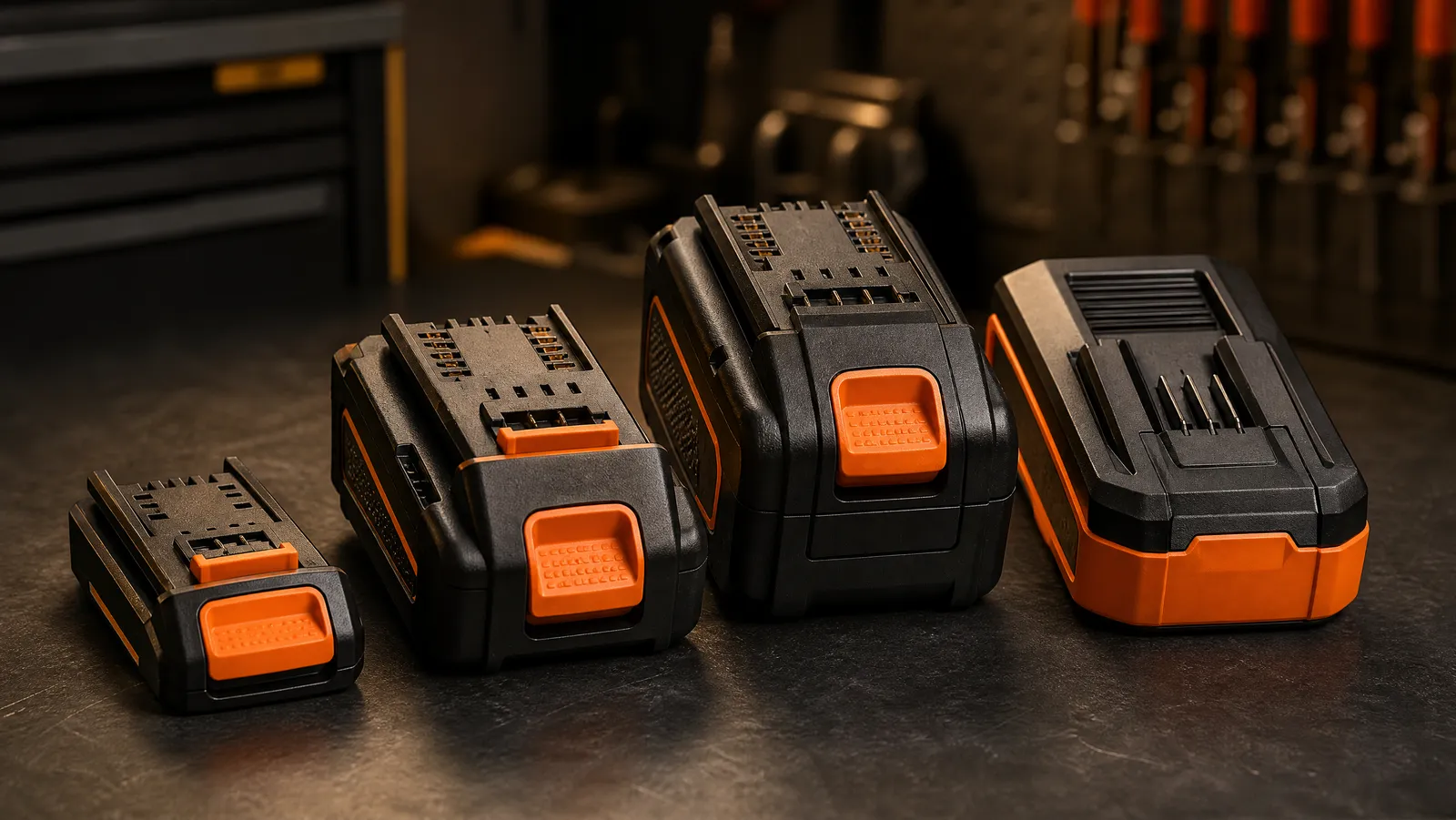
Cordless batteries only fit their own platform, and that's deliberate. A Makita LXT pack won't click into a Milwaukee M18 tool even though both run at roughly 18 volts, because every manufacturer uses its own connector geometry and its own set of communication contacts. There is no universal cordless battery and there isn't going to be one. If amp-hours, voltage ratings and charge times are still fuzzy, our explainer on cordless power tool batteries explained covers the fundamentals in plain English.
That makes your first kit a far bigger decision than its price tag suggests. A $149 two-tool kit looks like a $149 decision. It isn't. It's the down payment on a system: every sander, saw, blower and work light you add over the next decade will either drop onto that charger or cost you a second charger and a second set of packs.
So the useful question isn't "which brand makes the best drill." It's "which system will still suit me in five years, when I own eight of its tools instead of two?" That's the question the rest of this guide answers.
How the four platforms compare
Here's the shape of the decision. Every price below is the cheapest sensible way into that platform as of July 2026 — the kit we'd hand a first-timer, not the flagship bundle.
Two things worth reading into that table. First, entry price is a terrible proxy for what a platform costs you. DeWalt's kit is the cheapest door on the list at $149.00 as of July 2026 — a 38% discount off its $239.00 list price — but a DeWalt sander costs more than a Ryobi sander, so the gap narrows with every tool you add. Ryobi's $284.00 kit looks expensive until you notice it contains six tools rather than two.
Second, where a brand is sold matters more than DIYers expect. According to House Digest, Ryobi's tools are available in physical stores only through The Home Depot under a long-running exclusive arrangement — excellent if there's one nearby, annoying if there isn't. The other three are stocked far more broadly.
We unpacked these bundles tool by tool in our roundup of the best cordless power tool combo kits for beginners. Bear in mind that kit prices swing hard in both directions, and today's discount is not a permanent feature of the platform.
The four brands, and who each one is for
Four platforms, four genuinely different kinds of DIYer. Find yourself.
DeWalt 20V MAX — the best all-rounder for most DIYers

DeWalt DCK240C2
The two tools most home jobs need — a 1/2-inch drill/driver and a 1/4-inch impact driver — with two batteries, a charger and a bag. The cheapest credible door into DeWalt's 20V MAX system.
Pros
- Covers the two core jobs: drilling holes and driving screws
- Compact and light — the impact driver is 5.55 in. and 2.8 lbs, the drill 7.5 in. and 3.6 lbs
- LED work lights on both tools, with a 20-second delay
- 3-year limited warranty
Cons
- Only two tools — no saw, sander or work light in the box
- The listing doesn't state battery capacity, so plan on a larger pack later
If you'd rather not agonise over this, buy DeWalt and get on with your project. 20V MAX is the safest default: huge, cheap to join, and stocked everywhere from national chains to the hardware store in a small town. DeWalt's own 20V MAX page describes the system as "300+ 20V products and growing," which in practice means that whatever odd tool your next project demands, there's a version of it that takes a battery you already own.
The DCK240C2 is the cheapest credible way in: a 1/2-inch drill/driver and a 1/4-inch impact driver — the pair that between them handle most household jobs — plus two batteries, a charger and a bag for $149.00 as of July 2026, down from a $239.00 list price. Both tools are compact (the impact driver is 5.55 inches and 2.8 lbs, the drill 7.5 inches and 3.6 lbs), both carry LED work lights with a 20-second delay, and DeWalt backs them with a 3-year limited warranty.
The honest downside: two tools is a lean start. No saw, no sander, no light, and the listing doesn't state battery capacity — treat this as a beginning, not a finished kit.
Ryobi ONE+ — the best value, and the widest tool range

Ryobi ONE+ P1819
Six ONE+ tools — drill/driver, impact driver, reciprocating saw, circular saw, multi-tool and a work light — plus a 4.0Ah and a 1.5Ah battery. The widest coverage per dollar on this page.
Pros
- Six tools cover drilling, driving, cutting and demolition out of the box
- Ships with both a 4.0Ah and a 1.5Ah battery, plus charger, bag and accessories
- Every ONE+ 18V battery fits every ONE+ tool — the listing cites over 125 of them
Cons
- Costs more up front than the two-tool DeWalt or Makita starters
- Two batteries have to cover six tools, so expect charger queues
Ryobi is the platform that most rewards someone who owns a house. Nothing here gives you this much tool for this much money, and few systems have such a long tail of niche gear well beyond drills and saws. Ryobi's own 18V ONE+ page now puts the platform at "over 300+ compatible products"; the box for this kit still quotes the older "over 125" figure, which tells you how quickly the range is growing.
The P1819 kit is six tools — drill/driver, impact driver, reciprocating saw, circular saw, multi-tool and an LED work light — with a 4.0Ah and a 1.5Ah battery, a charger, a bag and accessories, for $284.00 as of July 2026. On cost per tool, nothing else here is close, and you can drill, drive, cut and demolish from the first afternoon.
The honest downside: two batteries stretched across six tools means more time waiting on the charger, and ONE+ is a consumer platform — engineered for weekends and evenings, not eight hours a day, five days a week.
Milwaukee M18 — for DIYers who work like pros
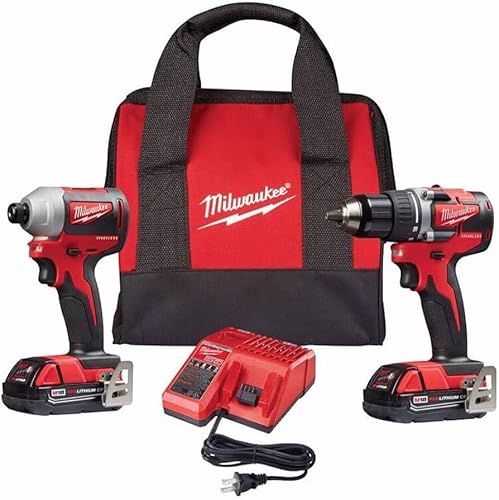
Milwaukee 2892-22CT
A compact brushless M18 drill/driver and impact driver with two batteries — the entry point to the platform most professionals build on.
Pros
- Brushless motors, which Milwaukee pairs with the battery for longer run time
- Compact design suits overhead and tight-space work
- Opens the M18 system, which the listing puts at more than 175 tools
Cons
- The priciest way in here at $289.00 as of July 2026
- Two tools only, and every M18 tool you add later carries the same premium
Milwaukee is what you buy when the tool has to outlast the way you treat it. It arguably has the strongest professional following of the four, and the reason to pay up as a DIYer is durability and backing rather than any single number on the box. Milwaukee's own published warranty covers its power tools for five years, against the three-year limited warranties DeWalt and Ryobi state on their own power tools — the longest standard cover here. Milwaukee's own M18 page describes the system as "over 200 performance-driven solutions, and growing."
The 2892-22CT is a compact brushless drill/driver and impact driver with two batteries, at $289.00 as of July 2026 — the steepest entry price here. The brushless motors are the point: Milwaukee credits the brushless motor and battery pairing with longer run time, and brushless tools tend to last longer because there are no carbon brushes to wear away. The compact bodies suit overhead and tight-space work.
The honest downside: you're paying professional prices for headroom that only shows up under sustained load. If the heaviest thing you build this year is a deck, you'll never find the ceiling — and every M18 tool you add later carries the same premium.
Makita 18V LXT — the most comfortable to use all day

Makita CT225SYX
Among the lightest pairs on this page — a 3.3 lb drill and a 2.8 lb impact driver with rubberized grips — for anyone who cares how a tool feels after an hour, not just what it does in the first minute.
Pros
- Very light: 3.3 lb drill and 2.8 lb impact driver, both weighed with battery
- 2-speed drill (0-600 and 0-1,900 RPM) rated to 480 in-lbs of max torque
- Impact driver rated to 1,460 in-lbs at up to 2,900 RPM and 3,500 IPM
- Rubberized soft grips to cut operator fatigue
Cons
- Ships with smaller 1.5Ah batteries
- Two tools only — no saw or bundled accessories
Makita's advantage doesn't show up in a spec comparison until your forearm brings it up. LXT tools are consistently among the lightest and best-balanced in their class, and if you have wrist trouble, work overhead, or simply plan to spend an entire Saturday driving screws into a ceiling, that beats a torque figure every time. Makita bills LXT as the world's largest 18V slide-style battery system, with over 350 compatible products spanning power tools, outdoor equipment, lighting and dust extraction.
The CT225SYX pairs a 2-speed drill/driver (0-600 and 0-1,900 RPM, rated to 480 in-lbs of max torque) with an impact driver rated to 1,460 in-lbs at up to 2,900 RPM and 3,500 IPM, for $199.00 as of July 2026. The drill weighs 3.3 lbs with a battery fitted and the impact driver 2.8 lbs, both with rubberized soft grips.
The honest downside: it ships with 1.5Ah batteries, which are small. They keep the kit light and cheap, but budget for a bigger pack before you take on anything long.
What about the cheaper brands?
Craftsman, Black+Decker, Skil and Hart all sell perfectly functional 20V-class cordless tools for less than any kit above, and pretending otherwise would be snobbery. A Craftsman V20 drill will hang your shelves. A Black+Decker kit will carry a first apartment through a year of small repairs.
The case for a budget platform is real when your ceiling is low and you know it. If your DIY genuinely consists of flat-pack furniture, curtain rails and one shelf a year, buy the cheap kit and pocket the difference. Spending $289 on Milwaukee to hang a mirror isn't a flex, it's a filing error.
The case against is what happens when that ceiling moves. Budget platforms have much shallower tool ranges, and range is the specific thing that makes a platform valuable — the day you decide to build a deck and there's no decent cordless circular saw on your system, you're going corded or buying in twice.
Our rule of thumb: if a budget platform is a deliberate choice, it's a good one; if it's a default because it was on the end cap, it usually isn't. Ryobi is the interesting middle ground — priced close to the budget brands, with a range that rivals the professional ones.
How to choose in five minutes
That covers most people. But here's the honest escape hatch that overrides all of it: if you already own two batteries of any brand, that's usually your answer. Two working packs and a charger are worth more than the marginal difference between these platforms, and switching means rebuying both. The same logic applies to a parent's or a neighbour's collection — sharing a platform with someone you borrow from beats a spec-sheet advantage you'll never measure.
Once the platform is settled, the next question is which tools to buy first, and the answer is shorter than beginners expect: a drill/driver and an impact driver cover the overwhelming majority of home jobs, with a circular saw third. Our guide to the cordless power tools worth owning first sets out the order we'd buy them in.
Switching platforms later (and why adapters aren't the fix)
You can switch, and people do. But switch deliberately rather than by accident, because the drift version — a DeWalt drill, a Ryobi sander and a Makita saw, three chargers, no shared spares — is how DIYers end up with a drawer of dead batteries and nothing that fits anything.
If you're moving, sell the old platform as a complete set including batteries and charger. A full kit is worth substantially more than the same tools sold bare, precisely because the buyer is joining a platform too. What you should not do is bridge the gap with third-party adapters.
There is one legitimate version of running two systems: adding a compact 12V-class platform alongside your main 18V or 20V one for tight-space work, as a deliberate second set rather than an accident.
Get the platform right the first time and none of this comes up. Once you've picked, our guide to the best cordless power tools for DIY walks through every category worth putting on that battery, and the ones that can wait.
Frequently asked questions
Can I use one brand's battery in another brand's tool?
No. Cordless batteries are brand- and platform-specific by design. Even two packs rated at the same nominal 18 volts use different connector geometry and different communication contacts, so a Ryobi ONE+ battery won't fit a DeWalt 20V MAX tool and a Makita LXT pack won't fit Milwaukee M18. Third-party adapters technically exist, but as Pro Tool Reviews notes, they break the safety communication between pack and tool and put the warranty on both at risk. Pick one platform and stay on it.
Is Ryobi good enough for a homeowner?
For the overwhelming majority of homeowners, yes. ONE+ is a consumer platform rather than a jobsite one, but consumer use is exactly what most DIY is — evenings, weekends, and long gaps in between. The trade-off is durability under sustained heavy use, not capability on ordinary jobs. And Ryobi's own 18V ONE+ page now puts the system at over 300 compatible products, so the range is not the compromise it once was.
Is Milwaukee worth the extra money for DIY?
It depends on how hard you work. At $289.00 as of July 2026 the M18 entry kit costs almost twice the DeWalt one, and much of that buys headroom under sustained load a weekend DIYer rarely reaches. Where it does pay off is longevity and backing: Milwaukee's published warranty on its power tools runs five years, against three for DeWalt and Ryobi. If you renovate constantly or work semi-professionally, it's defensible. For hanging shelves, it isn't.
Which brand has the best warranty?
On standard cover, Milwaukee. Milwaukee's published warranty covers its power tools for five years (batteries are covered separately, for three), while DeWalt and Ryobi both state three-year limited warranties on their power tools — and the DeWalt kit above states a 3-year limited warranty on its own listing. Makita warrants its lithium-ion tools, batteries and chargers for three years as well, so Milwaukee is the outlier here rather than the norm. Whichever brand you choose, register the tool and keep the receipt: warranty claims almost always turn on proof of purchase date.
About the Author
Cheryl Thompson
Cheryl Thompson is the tools editor at The DIY Tool Review. A lifelong fixer and self-confessed tool addict, she has spent years buying, borrowing and wearing out hand and power tools across home renovation, furniture building and everyday repairs. She writes hands-on, no-nonsense reviews to help fellow DIYers spend their money on the tools that actually last.